





- Many businesses are looking to automate their customer support due to the growing demand for flawless and instant service.
- Zendesk and Capacity are customer support platforms designed to reduce agent workload and cut costs, but they serve different needs.
- Choose Zendesk if you need a traditional, enterprise support platform with deep reporting and complex workflows.
- Choose Capacity if you want faster deployment, AI-driven automation, voice bots, and tools that span support, sales, and marketing with minimal technical overhead.
- This Zendesk vs. Capacity comparison breaks down features, pricing, automation, AI, analytics, and setup complexity to help you choose the right customer support and automation platform.
Zendesk vs. Capacity at a glance
| Capability | Zendesk | Capacity |
| Ease of setup | ★★☆☆☆ | ★★★★☆ |
| Community and resources | ★★★★★ | ★★★☆☆ |
| Reporting and analytics | ★★★★☆ | ★★★☆☆ |
| Outbound marketing and sales campaigns | ★★☆☆☆ | ★★★★☆ |
| Virtual agent customization | ★★★☆☆ | ★★★★★ |
| Advanced voice technology | ★★★☆☆ | ★★★★★ |
| Responsive and personalized customer support | ★★☆☆☆ | ★★★★★ |
With live agent interactions costing anywhere from $7 to $13.50 per conversation compared to just $0.50 to $2.00 for AI-powered support, it’s no surprise that businesses with long-term vision are turning to automation. Modern support automation platforms take on the challenge and promise to reduce costs without sacrificing customer experience by streamlining workflows and minimizing manual effort.
One such tool is Zendesk. It positions itself as an all-in-one solution, promising faster response times, robust automation features, and deeper insights into team performance and overall business health.
But if you’ve explored Zendesk, you’re probably wondering what else the market has to offer. A popular alternative to Zendesk is Capacity, an internal and external support automation tool.
Both platforms offer great features, but one might be a better fit than the other for your specific business needs. So let’s take a closer look at Zendesk vs. Capacity.
In this guide, you’ll learn:
- What similar features Zendesk and Capacity offer
- What benefits Zendesk has for enterprises
- How Capacity replaces 4–5 tools
- And finally, a verdict to help you decide which software is right for your business
Zendesk vs. Capacity at a glance: shared features, pricing, and customer reviews
Zendesk and Capacity are similar at their core. They both offer features and tools for businesses to automate customer support and make it more unified and connected. So let’s take a look at the features both platforms share.
| Feature | Descriptions |
| Ticketing system | They let you capture, track, and manage support requests from users or customers so your team can organize and follow up efficiently. |
| Knowledge base that powers self-service | Each platform supports creating self-help resources or centralized knowledge with agent-assist features that customers or employees can consult without needing live help every time. |
| Live chat | Both offer real-time chat interfaces for engaging users directly and responding faster than email. |
| AI and automation | Zendesk and Capacity incorporate automation and AI features to streamline workflows, handle repetitive tasks like triaging or routing, and improve response times. |
| Omnichannel support | Both platforms can manage customer interactions across various communication channels, like email, web chat, and voice, giving teams one place to see all support requests. |
Zendesk pricing and plans

Zendesk pricing is divided into plans and add-ons. The platform offers four primary customer service plans, with options for employee support and advanced features. Customer support pricing (billed annually) includes:
- Support Team — $19 per user per month
- Suite Team — $55 per user per month
- Suite Professional — $115 per user per month
- Suite Enterprise — $169 per user per month
Free trial: 14 days
Capacity pricing and plans
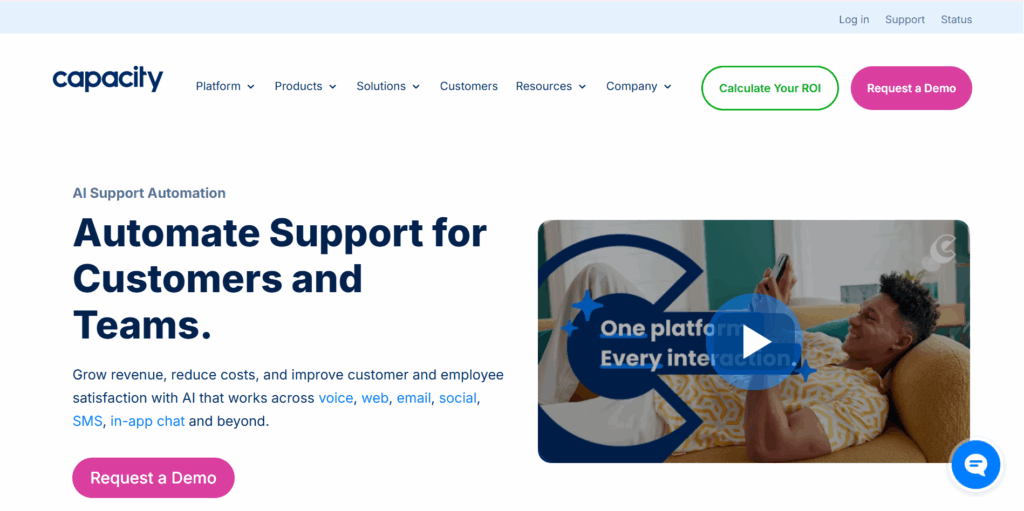
Capacity offers custom plans, allowing you to choose which add-ons and features to integrate, and you pay only for what you use.
Free trial: 14 days
Zendesk customer ratings
G2: 4.3/5
Most Zendesk customers praise the tool for its abundant features, convenient ticket management, and connectivity.
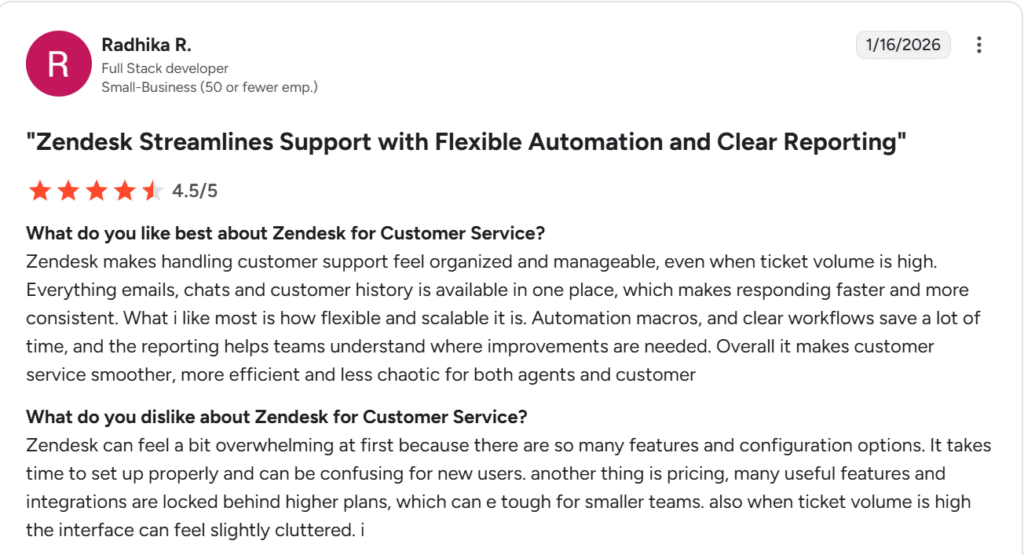
However, many also note that Zendesk is complicated to set up. Because the platform is so large and intricate, smaller businesses might find it too complex and expensive. If you’re looking for customer support tools for a smaller operation, don’t miss these Zendesk competitors.
Capacity customer ratings
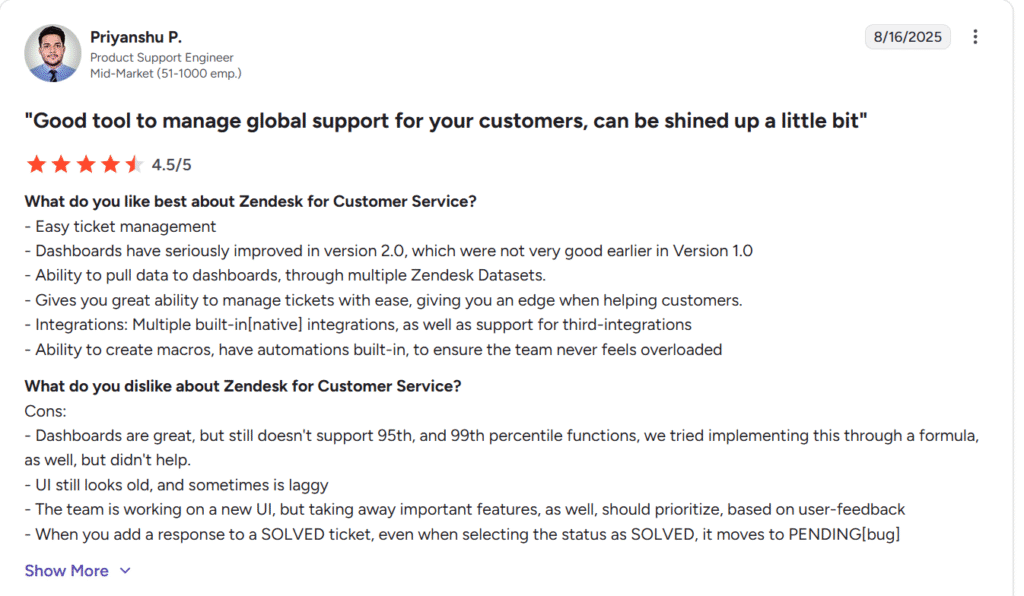
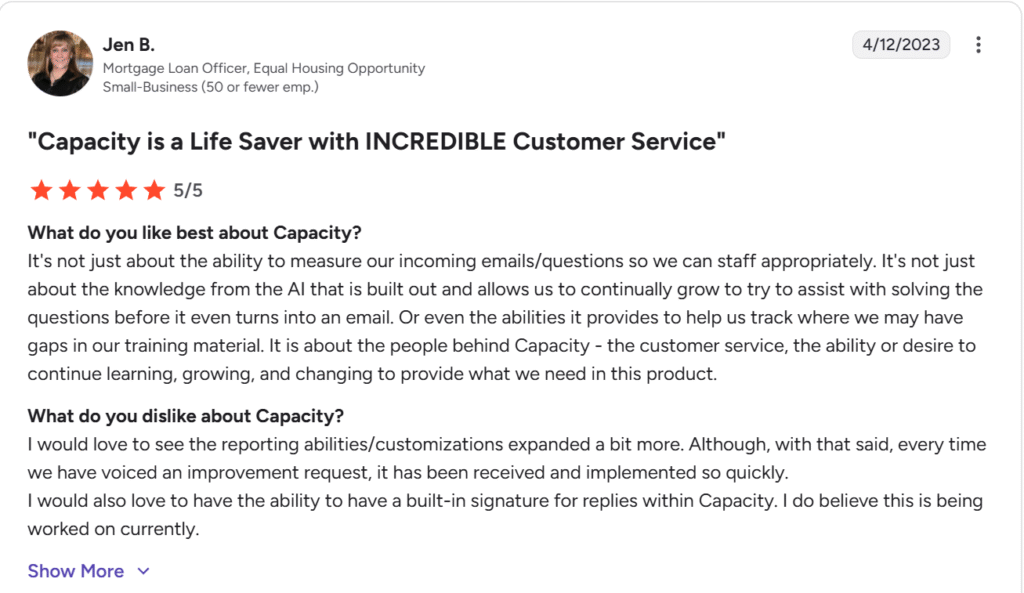
G2: 4.8/5
Capacity users share positive experiences when it comes to customer care and attention. They also praise its ease of use, efficiency, and helpful service teams, which are ready to support new and existing customers with any issues they might have.
Zendesk vs. Capacity key differences
Zendesk and Capacity both have a mission to enhance customer support productivity and cut costs. But they each offer unique features that suit different business needs. It’s important to know which features you need most in a business solution to get the best bang for your buck. So let’s take a look at the advantages and disadvantages of Zendesk vs. Capacity.
Zendesk offers a large community for support and resources
Zendesk has been in the customer support space for nearly two decades and has a very large ecosystem of:
- Users
- Partners
- Consultants
- Marketplace apps
- Training materials
- Community forums
There are extensive third-party resources and a large developer community focused on building apps and integrations.
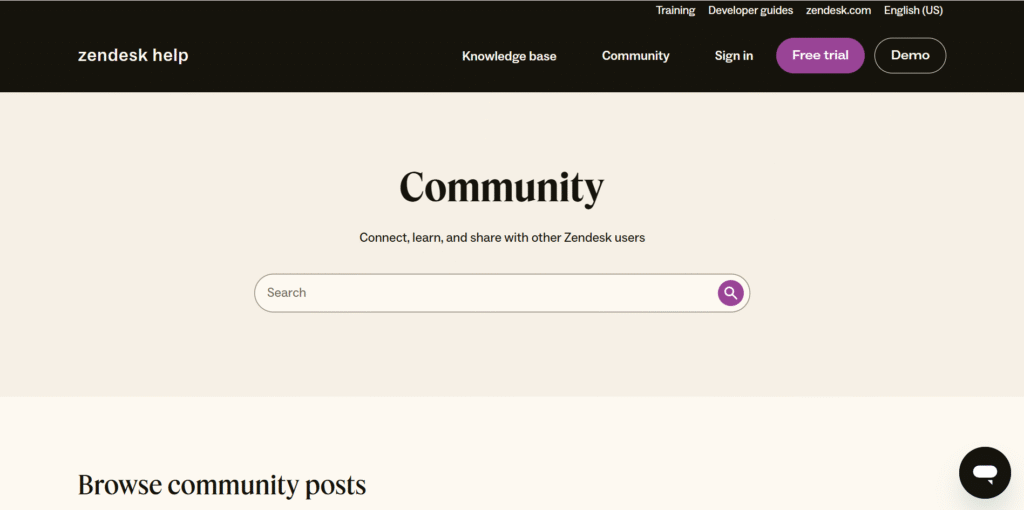
When you run into tough questions about workflow design or complex integrations, chances are there’s a forum thread, expert consultant, or marketplace app that can help.
Capacity supports outbound marketing and sales campaigns
Capacity goes beyond internal helpdesk and inbound support. The platform includes campaigns and workflow automation tools that help with proactive outreach, lead capture, lead routing, SMS and voice campaigns, and qualification flows.
It can trigger actions, send follow-ups, and integrate directly with marketing stacks to help you drive conversions and engagement, not just respond to tickets.
Teams looking to automate marketing and sales engagement, such as:
- Targeted SMS
- Outbound messages
- Funnel nudges based on interaction context
will find features in Capacity that go beyond core support ticketing.
Zendesk has complicated configurations and a long time to launch
Zendesk is a full enterprise customer support platform that supports large, complex workflows, extensive customization, and deep integrations.
Because of that range and depth of features, such as:
- Ticketing
- Omnichannel routing
- SLA management
- Advanced workflows
- Quality assurance
- Workforce management
- And more
Setting it up for a large team with many custom requirements often involves significant configuration work. Many users and reviewers note this learning curve and configuration overhead compared to lighter-weight systems.
If you’re considering Zendesk, keep in mind that it might take weeks or even months to launch a fully tailored Zendesk deployment, especially at mid-market and enterprise scale.
Capacity is low-/no-code with ready-built integrations
Your customer support team shouldn’t always rely on developers to help set up new tools. More and more businesses are turning to low- and no-code tools for this exact reason. It’s no surprise that 84% of enterprises rely on low-code to reduce IT strain, speed up time to market, and involve different departments more directly in digital development.
Capacity offers many no-code and low-code features that let you quickly build:
- AI workflows
- Virtual agents
- Automations
without deep technical resources.
The interface supports drag-and-drop or guided setup for campaigns, workflows, and bot logic, and it comes with many prebuilt integrations for CRM, helpdesk, collaboration, and marketing tools that are ready to connect out of the box.
Because the tool is designed to work with preconfigured connectors and AI workflows, getting up and running with intelligent automation and bots typically takes less time and fewer specialized resources than configuring a large, traditional platform.
Zendesk shines at deep reporting and analytics
As data becomes more valuable, businesses still struggle to gather and use it. Over half of executives admit their companies lack the capabilities to develop deep, data-driven insights.
Zendesk takes on this challenge. It allows you to build analytical dashboards around customer support performance metrics, such as:
- CSAT trends
- Agent productivity
- Ticket volumes
- Resolution times
- Quality assurance scoring
- Coss-channel analytics
If your organization needs detailed historical analytics, benchmarks, scorecards, and performance reviews tied directly into your support workflows, Zendesk’s suite is designed for that from the ground up.
Capacity offers deep customization and features to personalize your virtual agents
Capacity’s intelligent virtual agents are designed to be highly customizable, from branded voice and chat personalities to tailored conversation logic, guided conversations, and integration-aware workflows that tie back into CRM and marketing data. The platform combines both agentic AI and generative AI to bring the best of both worlds: speed, ownership, and natural language.
You can personalize how your bots phrase responses, what data they pull from your systems, and how they qualify users, which makes bots feel more like an extension of your brand or process.
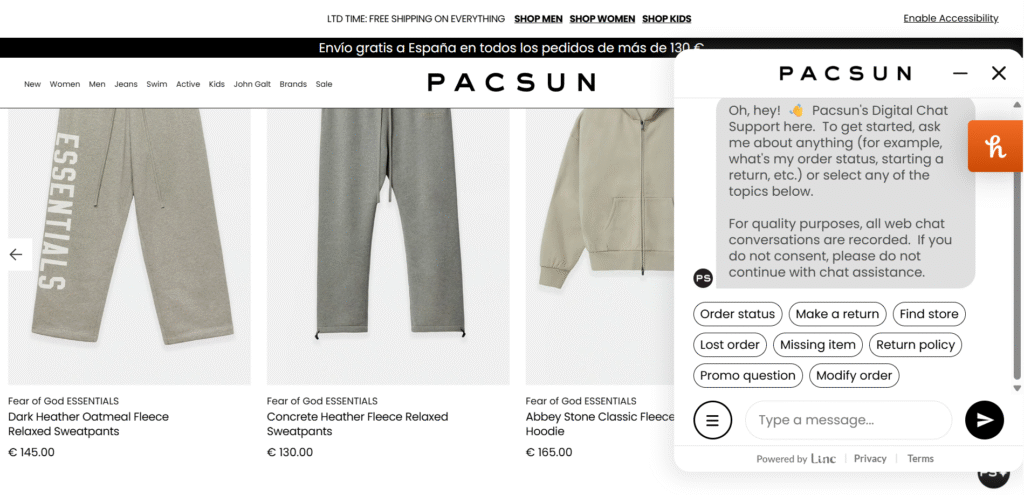
PacSun, a brand behind trendy styles, offers a great example of how Capacity’s virtual agents adapt to different audience requests. A web chatbot speeds up customer service and cuts wait times by providing personalized self-service options. As a result, 85% of PacSun’s customer inquiries are now handled by virtual agents.
Capacity has very advanced voice tech
If you’re planning to put AI agents on the front line of your voice support, you have to make sure they sound natural and can carry a conversation. Capacity includes AI-powered voice automation, meaning conversational voice bots answer and route calls, understand natural language, and handle inbound and outbound voice interactions, including advanced call analytics and automated outbound message delivery.
This approach moves beyond simple IVR trees to natural language voice agents that can automate customer calls, reduce hold times, interpret intent, and proactively reach contacts with calls or messages from outbound campaigns.
Capacity offers quick and responsive support
Integrating a new tech solution into your business processes can be complicated. It’s normal to face issues or have questions during call center training and setup. However, it’s much easier when you have a responsive support team on your side.
Capacity prides itself on offering top-quality, friendly, and responsive support. After all, it’s a tool designed to improve customer and employee experience, so it takes this seriously and applies it across every part of the business, from the solutions it builds to the support it provides to its clients.
The verdict: Zendesk vs. Capacity: Which is right for you?
By now, you have a clearer picture of the advantages of these two automation platforms for your unique business needs. Let’s take a look at the final verdict.
Choose Zendesk
…when your priority is structured, enterprise-grade customer support with deep workflows and analytics.
It’s the best option if:
✔ You’re building a traditional support center or helpdesk for customers
✔ You need robust ticketing, SLA tracking, escalation rules, and workflows
✔ Performance metrics and analytics are key to your operations
✔ You benefit from a large partner ecosystem, templates, and community resources
✔ You have a team ready to invest time in setup and configuration
Choose Capacity
…when your focus is rapid automation, AI-driven interactions, unified omnichannel customer and employee support, and operational efficiency, especially beyond core support.
It’s the best option if:
✔ You want a fast setup with minimal coding
✔ You’re building AI-powered virtual agents for internal teams or customers
✔ You need automation that spans support, sales, and marketing workflows
✔ Outbound campaigns, lead engagement, or proactive messaging matter
✔ You want voice AI and conversational automation as first-class features
✔ Personalization of bot interactions is important to your brand or process
Support large teams with a platform tailored to your unique needs
Customer and employee service automation can transform how people perceive your business, increase your team’s productivity, cut costs, and build customer trust. When you find the right tool for your business, these benefits double.
If you’re looking for enterprise-grade automation with the speed and personal attention you’d expect from a small team, don’t skip Capacity.
It’s one platform for virtual agents, human agents, QA, and conversational intelligence, replacing 4–5 disconnected AI vendors. But let the numbers speak first. Try our ROI calculator to see how much you could save with the right automation strategy. If you like what you see, book a demo.
FAQs
Zendesk competes with other customer support and helpdesk platforms, including:
– Capacity
– Freshdesk
– ServiceNow
– Intercom
– Help Scout
Zendesk provides customer service software that helps businesses manage, respond to, and analyze customer support interactions across channels like email, chat, messaging, and voice.
Zendesk isn’t a full CRM. Zendesk is primarily a customer service platform, not a sales CRM. It can store customer data and integrate with CRMs like Salesforce, but it’s focused on support, not sales pipeline management.
Zendesk is used for:
– Managing customer support tickets
– Running omnichannel support
– Tracking SLAs, CSAT, and agent performance
– Scaling customer service operations with workflows and automation