

 Customer Support
 HR & Ops
 IT Support
 Sales & Marketing

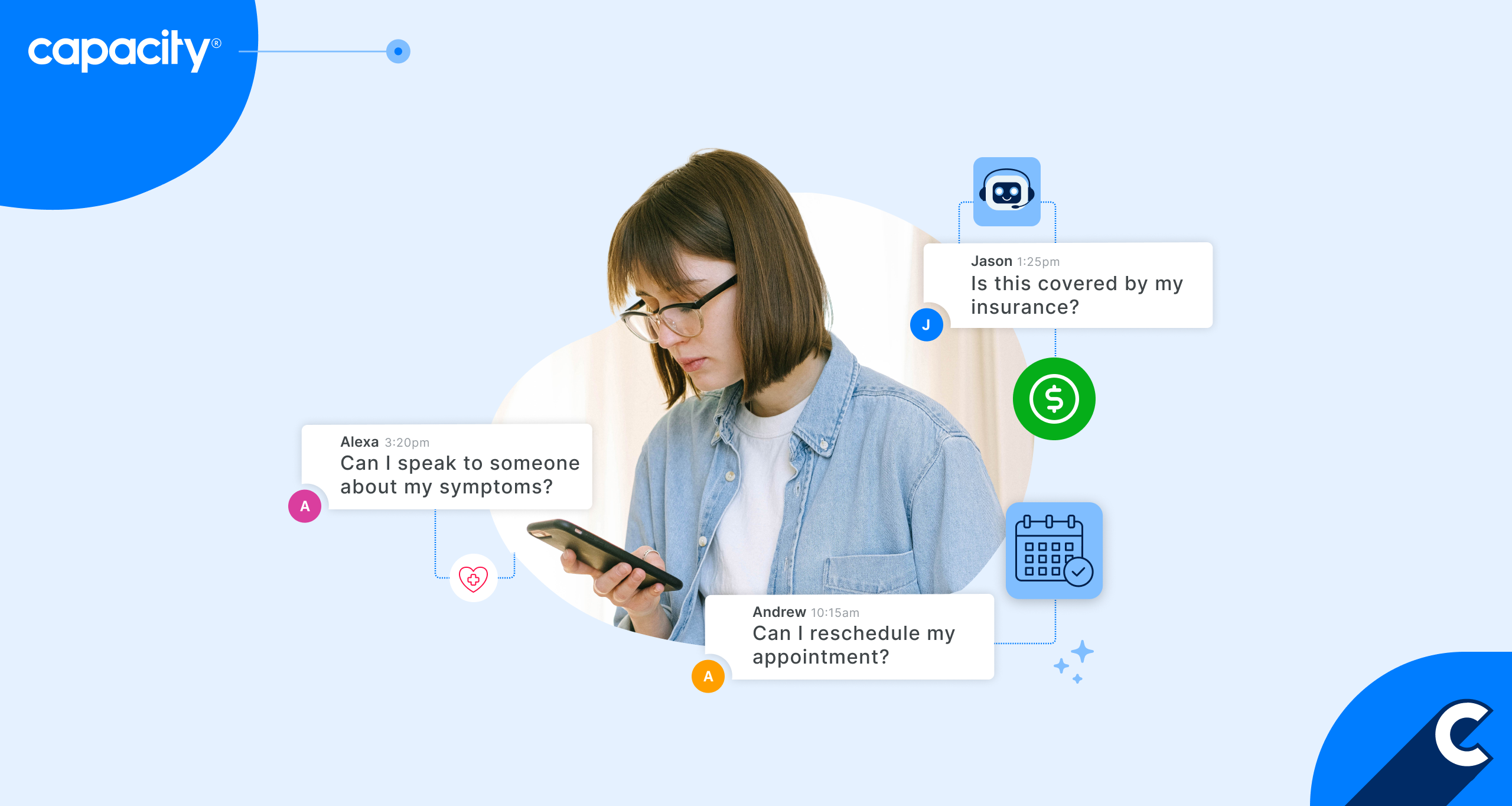
“Can I speak to someone about my symptoms?”
“Is this covered by my insurance?”
“Can I reschedule my appointment?”
Healthcare teams hear these kinds of questions all day long. They’re simple, but answering them over and over eats up valuable time, drives up costs, and can leave patients feeling frustrated or forgotten if they don’t receive a prompt reply.
More and more healthcare providers are now using AI chatbots to help manage this load. These tools can guide patients through symptom checks, answer insurance questions, provide mental health support, and handle basic administrative tasks—quickly and reliably.
In this article, we’ll look at six of the top AI healthcare chatbots worth investing in. Each one is built to solve a different challenge, from improving access to information, to helping patients feel more supported at every stage of their health journey.
But first, let’s take a closer look at what a healthcare chatbot actually is—and how it can benefit patients.

Streamline Complex Processes Instantly
Capacity's AI and automation technology can help:
- Answer FAQs anytime, anywhere
- Find relevant documents within seconds
- Give surveys and collect feedback
What is a healthcare chatbot?
A healthcare chatbot is an AI-powered virtual assistant designed to improve communication between patients and providers. Using natural language processing, these bots simulate real conversations and help guide patients through everyday tasks like scheduling appointments, checking symptoms, or requesting prescription refills.
Because they’re trained on medical data and terminology, they deliver fast, accurate responses, while still feeling personal and supportive.
What can chatbots in healthcare be used for?
Think of a healthcare chatbot as your front desk, call center, and patient portal—all in one. These tools go far beyond simply answering questions. Powered by conversational AI in healthcare, they’re designed to handle the repetitive, time-sensitive tasks that often overwhelm staff and slow down operations.
Here are some of the most common and high-impact use cases:
- Appointment scheduling: Patients can book, reschedule, or cancel appointments without picking up the phone or waiting on hold.
- Symptom checking: Chatbots guide patients through symptom-based questions and recommend appropriate next steps—whether that’s seeking care or managing symptoms at home.
- Medication management: They can send reminders to take medication and offer information about dosage, interactions, and side effects.
- Mental health support: Some chatbots provide structured emotional support based on evidence-based approaches like CBT, helping patients manage anxiety, depression, and stress between visits.
- Patient education: From post-op care to chronic condition management, chatbots offer timely, easy-to-understand health information tailored to patient needs.
- Health monitoring: They can collect and track health data like blood pressure, glucose levels, or daily symptoms and provide feedback or alerts based on patterns.
- Insurance and billing help: Patients can ask about coverage, claims, and costs without needing to navigate confusing portals or wait for a callback.
Used effectively, conversational AI in healthcare helps organizations deliver better support, faster, and gives clinical teams more time to focus on care.
The ethics of using chatbots in healthcare
Like any emerging technology, chatbots in healthcare raise important ethical questions, that’s why providers must be proactive about addressing them.
Here are some of the key considerations when deploying AI chatbots in clinical or patient-facing environments.
Patient privacy
Chatbots require access to patient data to provide personalized support. This raises valid concerns about how that data is collected, stored, and used. Healthcare providers must ensure patient information is handled in line with privacy laws and ethical standards.
Informed consent
Patients have the right to make informed decisions about their care. When using chatbots, it’s essential to clearly explain how data will be used and to give patients the option to opt out.
Accuracy and reliability
Chatbots must provide accurate, up-to-date information to be truly helpful. Healthcare providers should regularly update and maintain these tools to ensure safe and reliable support.
Human interaction
Chatbots provide convenient and personalized support, but they are not a replacement for human care. Healthcare providers should use them to enhance the patient experience while ensuring that real professionals remain available to offer the empathy, judgment, and expertise that only humans can deliver.
Common challenges when implementing AI chatbots
Despite their many benefits, implementing AI chatbots in healthcare isn’t always straightforward. From internal resistance to system compatibility issues, these tools require thoughtful planning and the right technology to succeed.
Here are some of the most common challenges and how to address them.
Resistance to change
New technology can raise concerns, especially among staff already managing heavy workloads. Some may worry that chatbots will complicate workflows or create more tasks. That’s why internal alignment and training are critical. Give teams hands-on experience using these tools and clearly show how chatbots can reduce (not add to) their workload.
Data integration
Chatbots can’t work in isolation. To be effective, they need real-time access to patient data for things like appointment availability, billing, and care history. That’s difficult if systems are disconnected. Strong integration capabilities, especially with EHRs and scheduling tools, are essential to ensuring your chatbot can deliver accurate, helpful responses.
User experience
If a chatbot feels clunky, robotic, or frustrating to use, patients won’t engage with it, no matter how smart it is behind the scenes. A smooth, intuitive experience is essential. That’s why platforms built on conversational AI in healthcare often perform better than rigid, rule-based bots. They understand context, adjust to user input, and feel more natural to interact with.
| ❓Not sure what sets them apart? Here’s how conversational AI differs from traditional chatbots. |
Maintenance and updates
Launching the bot is just the start. Healthcare policies, treatments, and patient expectations evolve constantly. To keep up, your chatbot needs regular updates. Assign a dedicated owner or partner who can maintain accuracy, fix bugs, and roll out improvements.
The top AI healthcare chatbots to explore in 2025
AI chatbots are becoming essential in healthcare, but not every platform solves the same problem. Some are designed for clinical triage, others for administrative automation, and some focus on patient engagement or mental health support. Choosing the right one starts with understanding your specific goals.
Ask yourself:
- Are you trying to reduce phone volume at your front desk?
- Improve access to care outside normal hours?
- Automate repetitive tasks like scheduling or billing inquiries?
- Provide patients with self-service tools for symptom checking or follow-ups?
Once your priorities are clear, it’s time to evaluate how a chatbot fits into your organization. Consider:
- System compatibility: Does it integrate with your EHR, CRM, and communication platforms?
- Ease of deployment: Can your team get it up and running quickly, or will it require custom development?
- Training and usability: Is it intuitive for staff and patients alike? Will your team need support or onboarding?
- Compliance and security: Is it built to handle protected health information and meet regulatory standards like HIPAA and GDPR?
- Scalability: Can the platform grow with your needs, across locations, departments, and communication channels?
With these criteria in mind, here are six of the leading AI healthcare chatbot solutions in 2025, each offering a different approach to streamlining care, reducing overhead, and improving the patient experience.
1. Capacity – Best platform for automating healthcare support
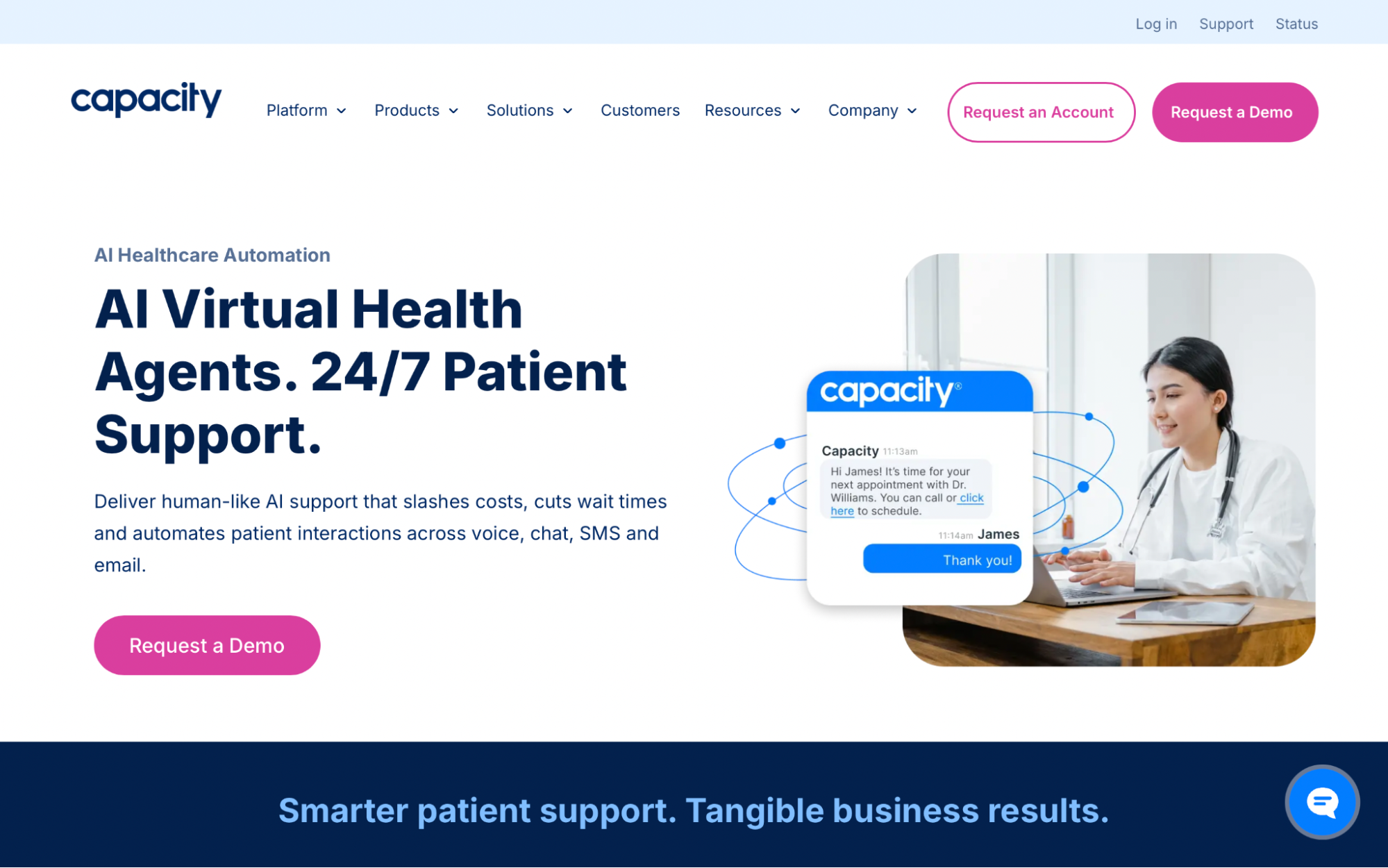
If your biggest bottleneck is patient support, you might want to check out Capacity’s AI healthcare automation solution. It gives healthcare organizations a powerful way to automate patient communication, streamline internal workflows, and reduce operational costs, without adding headcount or overhauling existing systems.
Everything from appointment scheduling to billing support, Capacity’s AI chat agents are designed to improve the patient experience while easing the burden on staff.
Key features:
- Automated patient self-service: Patients can schedule, reschedule, or cancel appointments, manage billing, and request refills via chat, voice, SMS automation, or email—24/7, without waiting on hold.
- Enterprise-grade compliance: Capacity is fully compliant with HIPAA, SOC 2, GDPR, and CCPA, ensuring secure handling of patient data across every channel.
- Low-code workflow automation: Healthcare teams can create custom automations for intake, reminders, verifications, and follow-ups using a flexible, no-code builder.
- Smart call routing & live agent handoff: AI handles routine questions and identifies urgent cases, routing them directly to human agents with full context.
- EHR & system integration: Capacity connects with tools like Epic and AthenaHealth, allowing real-time updates across scheduling, records, and billing.
- Analytics for performance & coaching: Track engagement, monitor call quality, and use AI-driven coaching tools to improve both patient support and staff efficiency.
What customers say 💬
“Capacity has been a long-term partner and has allowed us to automate many of our simple to medium complexity calls, freeing up our human resources to focus on more value-added activities. Capacity has been a true collaborator as we continue to evolve our business.”
— Dr. Stephen Shaya shares success story at J&B Medical
2. Youper – Best healthcare chatbot for mental health and mood support
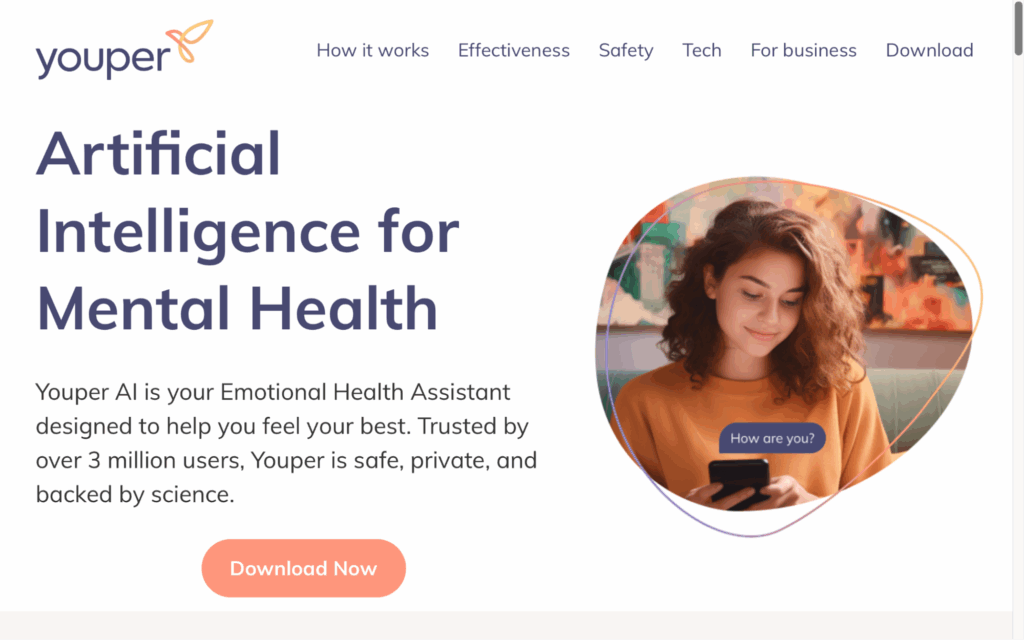
Youper is an AI-powered mental health assistant built to help users manage anxiety, depression, and emotional well-being through quick, personalized conversations. Backed by clinical research and behavioral science, Youper supports both standalone users and healthcare organizations looking to extend mental health care between appointments.
Key features:
- AI-driven emotional check-ins: Guides users through conversations based on CBT techniques, mindfulness, and mood tracking—all through natural, everyday language.
- Personalized mental health insights: The app adapts over time, using emotional data to offer tailored prompts and track progress toward mental wellness goals.
- Clinical integration ready: Supports hybrid care models by allowing data sharing with therapists or care teams, enhancing continuity between digital and live support.
3. Buoy – Best healthcare chatbot for diagnostic triage
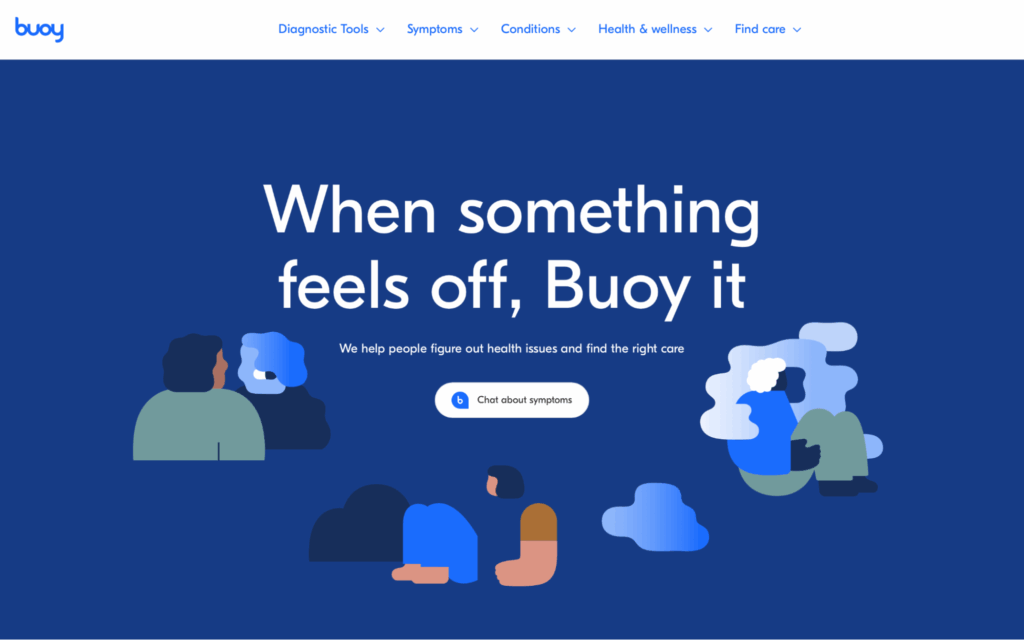
Buoy is designed to guide patients to the right care faster by using conversational AI to assess symptoms and recommend next steps. Built by a team of doctors and data scientists, Buoy helps patients make informed decisions while reducing unnecessary strain on providers.
Key features:
- Smart symptom triage: Uses clinical algorithms and natural language processing to ask the right questions and suggest appropriate care pathways.
- Seamless escalation options: Directs users to virtual care, in-person appointments, or telehealth based on urgency and location, improving care navigation.
- Data-driven insights: Collects anonymized data on user interactions to help healthcare organizations spot trends and optimize care delivery.
4. Sensely – Best healthcare chatbot for insurance and care navigation
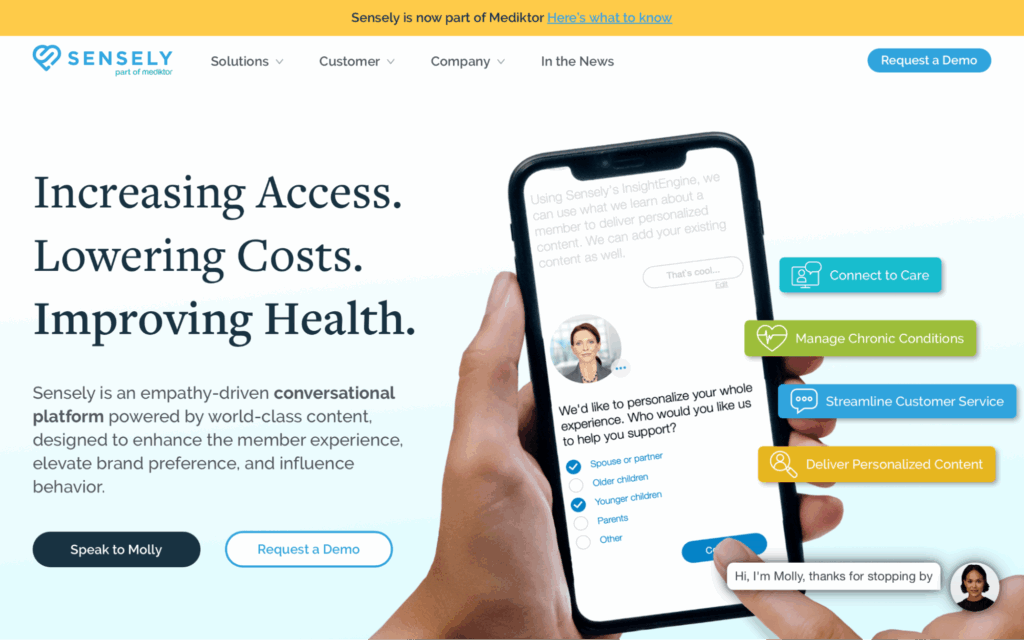
Sensely, now part of Mediktor, combines a friendly virtual assistant with powerful backend integrations to help patients check symptoms, manage insurance benefits, and navigate care options. Its avatar-based interface is designed to be approachable and multilingual, ideal for large health systems and insurers.
Sensely’s flagship product, AskFirst, is an online consultation platform developed in partnership with the NHS (the United Kingdom’s National Health Service). It helps patients access self-care tools and connect with appropriate services 24/7.
Key features:
- Empathy-driven virtual assistant: Sensely’s avatar-based chatbot (like “Molly”) engages users with voice and text to guide symptom checker, routine health tasks, and care navigation, designed to feel more personal than a typical chatbot.
- Trusted clinical content: Information provided is backed by reputable sources like the Mayo Clinic and the NHS, ensuring guidance is medically reliable and up to date.
- Multichannel deployment: Available across web, mobile apps, SMS, WhatsApp, Facebook Messenger, and more, making access to care seamless and device-agnostic.
- Personalization via Insight Engine: Sensely gathers user preferences and behavior data in real time to tailor interactions and deliver more relevant content or care pathways.
- Customizable conversation design: Healthcare organizations can easily build or adapt chatbot conversations using intuitive, low-code tools—ideal for brand-specific use cases or evolving patient needs.
What users say 💬
“As a First Contact Physio, I found working with Sensely very useful. I have been able to advise the patient to use the application to book directly back into my diary for a follow up appointment should they need further advice or guidance. This has aided patient continuity whilst accessing the service.”
— Ryan Bartlett
5. Ada Health – Best healthcare chatbot for symptom assessment at scale
Ada Health offers an advanced AI-powered symptom checker used by individuals, clinics, and global health organizations. Built on a medical knowledge base reviewed by doctors, Ada helps users assess symptoms quickly and confidently, while supporting healthcare providers with scalable triage tools.
Key features:
- Comprehensive symptom analysis: Gathers user input through adaptive questioning to suggest possible conditions and urgency levels.
- Clinically validated engine: Built with input from medical experts and regularly updated to align with global clinical guidelines.
- Flexible deployment: Available as a white-labeled solution or integrated into digital health platforms, telemedicine apps, or public health systems.
What users say 💬
“The app is quite accurate, asks the right questions, most of the time, and the assessment is reasonable enough.”
— Natalie (G2 review)
6. Healthily – Best healthcare chatbot for self-care and wellness guidance
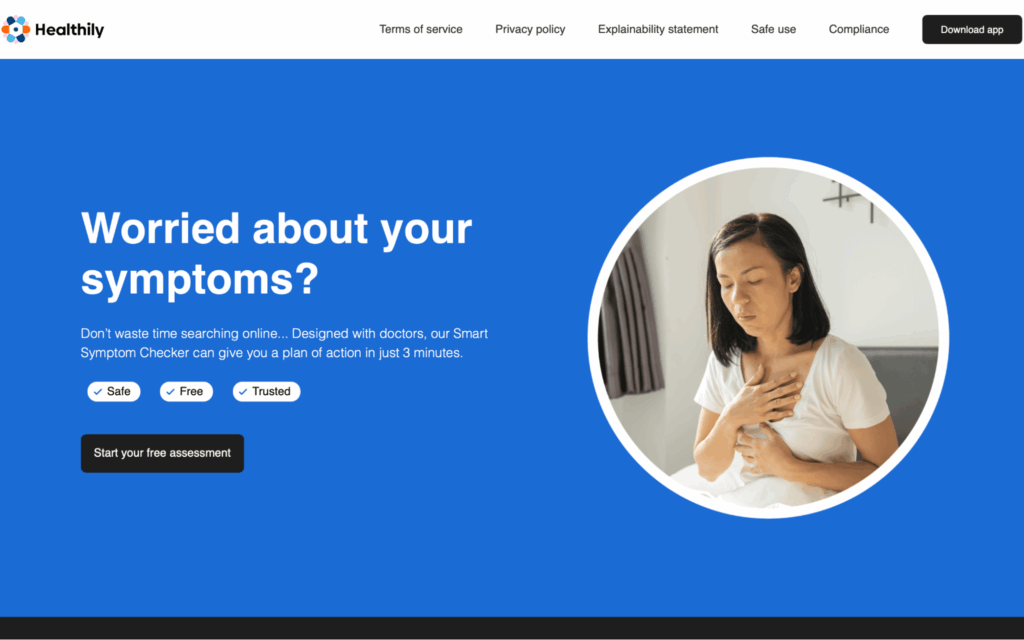
Healthily is a medically verified AI chatbot focused on helping users assess symptoms and manage everyday health concerns. Designed to promote informed self-care, it’s ideal for healthcare providers looking to support patients outside of clinical settings.
Key features:
- Trusted symptom checker: Offers evidence-based guidance using a structured assessment backed by doctors and medical institutions.
- Self-care advice and tools: Delivers personalized tips, health trackers, and content to help users manage conditions at home.
- Content library and integrations: Combines AI chat with an extensive health library, and can be embedded into partner websites or patient portals.
Final thoughts
Healthcare teams are stretched thin, and answering the same questions over and over isn’t helping. Healthcare chatbots can ease the pressure, but only if they’re easy to use, reliable, and built to fit into your day-to-day operations.
From triaging symptoms to reducing admin work, the right chatbot can improve patient experience and take pressure off busy teams.
Each tool on this list offers a different set of capabilities, depending on the challenge you’re trying to solve. If you’re looking for a solution that combines AI-powered chat, voice, and workflow automation with seamless integration into your existing EHR and support systems, Capacity is worth a closer look.
Ready to see what the right chatbot can do for your healthcare organization?
👉 Explore Capacity and get started today.
FAQs
What are the steps to setting up a healthcare chatbot?
Setting up a chatbot in healthcare involves a few essential steps:
- Define the goal: Clarify what the chatbot should do—book appointments, answer FAQs, triage symptoms, or educate patients—and tailor it to your audience’s needs.
- Choose the right platform: Pick a chatbot platform or development framework that fits your use case. Many offer healthcare-specific templates to speed up setup.
- Train the chatbot: Use medical data to help the chatbot understand natural language and respond accurately. The better the training data, the better the results.
- Design the conversation flow: Map out user interactions, such as greetings, questions, error handling, to keep the experience smooth and intuitive.
- Test and refine: Run the chatbot through different scenarios to catch bugs or gaps, then refine based on feedback and real-world use.
- Ensure data privacy: Make sure the chatbot follows healthcare regulations like HIPAA or GDPR. Encrypt data, use authentication, and keep conversations confidential.
- Monitor and update regularly: Track performance, review user feedback, and keep content and recommendations aligned with the latest medical guidelines.
What is the future of chatbots in healthcare?
The future of healthcare chatbots is likely to move far beyond basic automation. As conversational AI becomes more sophisticated, we may see chatbots play a central role in proactive care, monitoring patient data in real time, detecting early warning signs, and prompting timely interventions before symptoms escalate.
They could also become more context-aware, adjusting tone and responses based on a patient’s emotional state or medical history. In the years ahead, chatbots may evolve into true virtual care companions, integrated deeply with wearable devices, remote monitoring systems, and even AI diagnostics.
Are AI chatbots suitable for hospitals?
Yes, AI chatbots are increasingly suitable for hospitals, especially for handling high-volume, repetitive tasks. They can help with appointment scheduling, answering patient FAQs, routing inquiries, and even supporting post-discharge follow-ups. When integrated properly, chatbots improve response times, reduce staff workload, and support better patient communication.
Streamline Complex Processes Instantly
Capacity's AI and automation technology can help:
- Answer FAQs anytime, anywhere
- Find relevant documents within seconds
- Give surveys and collect feedback
Best Platform for Creating Healthcare Chatbots
Capacity is an AI-powered support automation platform that provides an all-in-one solution for automating support and business processes. It connects your entire tech stack to answer questions, automate repetitive support tasks, and build solutions to any business challenge.
Capacity’s conversational AI platform enables graceful human handoffs and intuitive task management via a powerful workflow automation suite, robust developer platform, and flexible database that can be deployed anywhere.
Here are some key features of Capacity that make it the best platform for creating healthcare chatbots:
- Top-notch security: Capacity is GDPR, CCPA, HIPAA, and SOC 2 compliant.
- All-in-one helpdesk: Capacity’s AI-powered chatbots can answer more than 90% of frequently asked questions, reducing the workload of healthcare professionals and allowing them to focus on more complex tasks.
- Low-code workflows: Capacity’s low-code workflows can automate tedious processes and tasks, increasing productivity in cross-functional healthcare teams.
- User-friendly knowledge base: Capacity’s platform includes a user-friendly knowledge base that empowers employees to access healthcare-related information.
- Conversational interface: Capacity enables patients to interact with chatbots naturally and intuitively, providing personalized support and assistance.
Want to see Capacity in action? Try it for free today!