


 Customer Support
 HR & Ops
 IT Support
 Sales & Marketing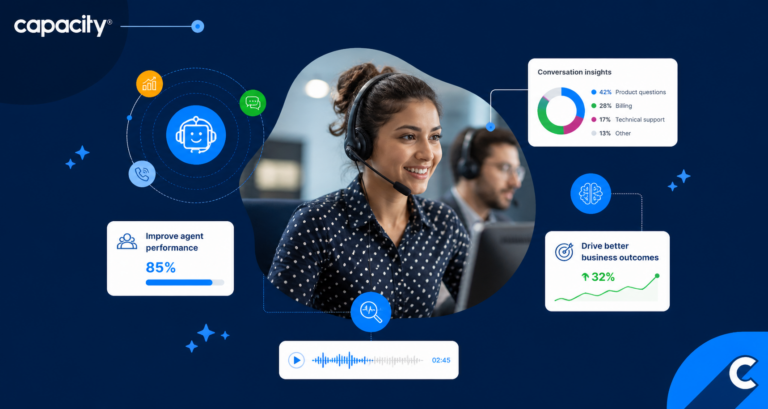
-
With more teams investing in AI for customer support, Sierra AI and Capacity are two popular tools worth comparing.
-
Sierra AI focuses on easy-to-configure, natural-sounding AI agents, with strong control over tone and behavior.
-
Capacity leans more toward an all-in-one support platform, bringing AI, knowledge, and omnichannel support together
With 92% of businesses planning to increase their investments in AI tools to improve their processes, customer support automation stands at the frontline. If automating your customer support or improving your current tool stack has been on your mind, you’ve probably come across two popular options in the market: Sierra AI and Capacity.
They both offer great features and promise to automate a big chunk of repetitive and manual customer service workload. But when it comes to Sierra AI vs. Capacity — which one is better for your business?
That’s what we’ll try to answer in this guide on Sierra AI vs. Capacity. We compare similarities and differences, as well as customer reviews, to give you a full view of each tool’s advantages and shortcomings.
Sounds good? Let’s begin!
Sierra AI vs. Capacity at a glance
Both Sierra AI and Capacity are customer service AI tools designed to automate customer interactions and improve their experience. As modern AI-powered platforms, they offer conversational AI assistance, automated ticketing, and high deflection rates.
Let’s compare the main features across both platforms.
| Aspect | Sierra AI | Capacity |
| Conversational quality | ⭐⭐⭐⭐ | ⭐⭐⭐⭐ |
| Action-oriented AI agents | ⭐⭐⭐⭐⭐ | ⭐⭐⭐ |
| Omnichannel deployment | ⭐⭐⭐ | ⭐⭐⭐⭐⭐ |
| Internal employee support | ⭐⭐ | ⭐⭐⭐⭐⭐ |
| Built-in knowledge base and search | ⭐⭐ | ⭐⭐⭐⭐⭐ |
| Ease of configuration | ⭐⭐⭐⭐ | ⭐⭐⭐ |
| Free trial | N/A | 14 days |
| Customer rating | 4.4/5 | 4.8/5 |
Sierra AI pricing and plans

Sierra AI offers outcome-based pricing, which means you pay only when the system completes a task for you. However, Sierra AI pricing can be a bit confusing and make budget planning more complicated.
Capacity pricing and plans
Capacity offers custom plans, allowing you to choose which add-ons and features to integrate, and you pay only for what you use.
Sierra AI customer reviews
G2: 4.4/5
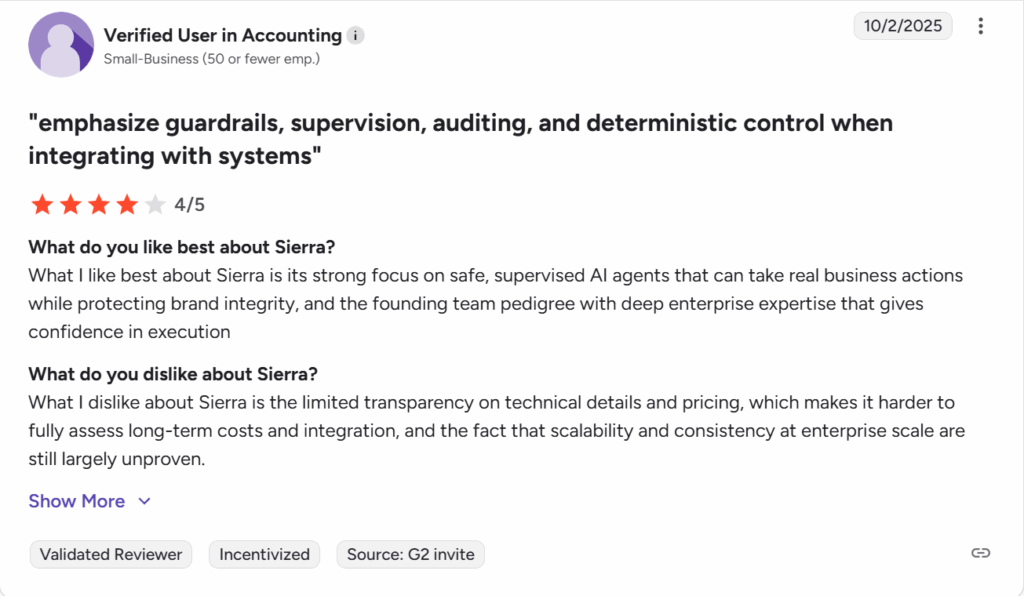
Most users praise this customer service AI tool for its ease of use, efficiency, and timely customer support. This makes sense, as the company is still relatively new, so its teams are ready to focus on and spend more time with each customer.
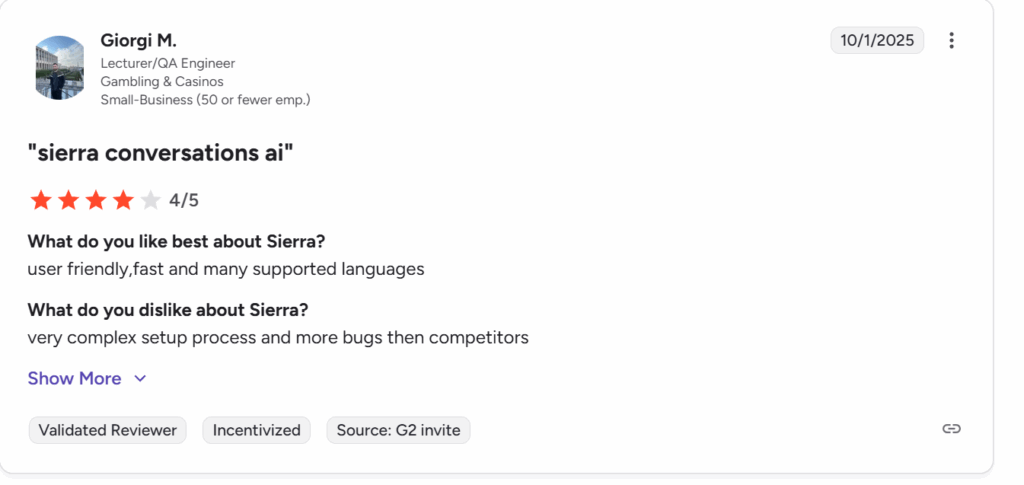
However, some customers also note that Sierra AI can get expensive and have occasional bugs. If you’re looking for more affordable alternatives, we invite you to check Sierra AI competitors.
Capacity customer reviews
G2: 4.8/5
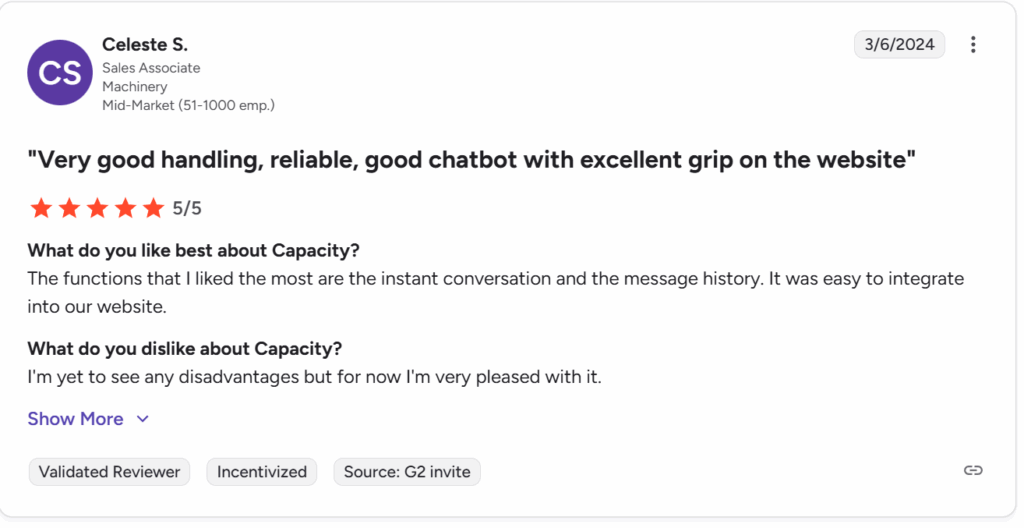
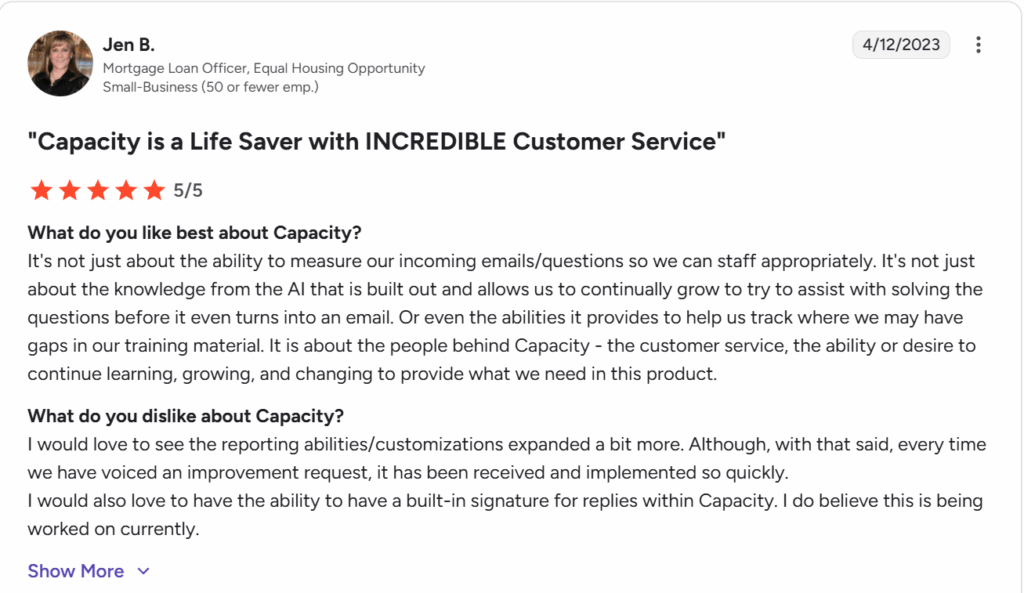
Users of Capacity share positive experiences when it comes to customer care and attention. They also praise its ease of use, efficiency, and many helpful features, such as access to conversation history and AI that learns over time.
However, others point out that advanced customization and pricing can be a bit steep for smaller businesses.
Sierra AI vs. Capacity similarities
Both customer service AI tools share some similarities targeted at improving customer experience.
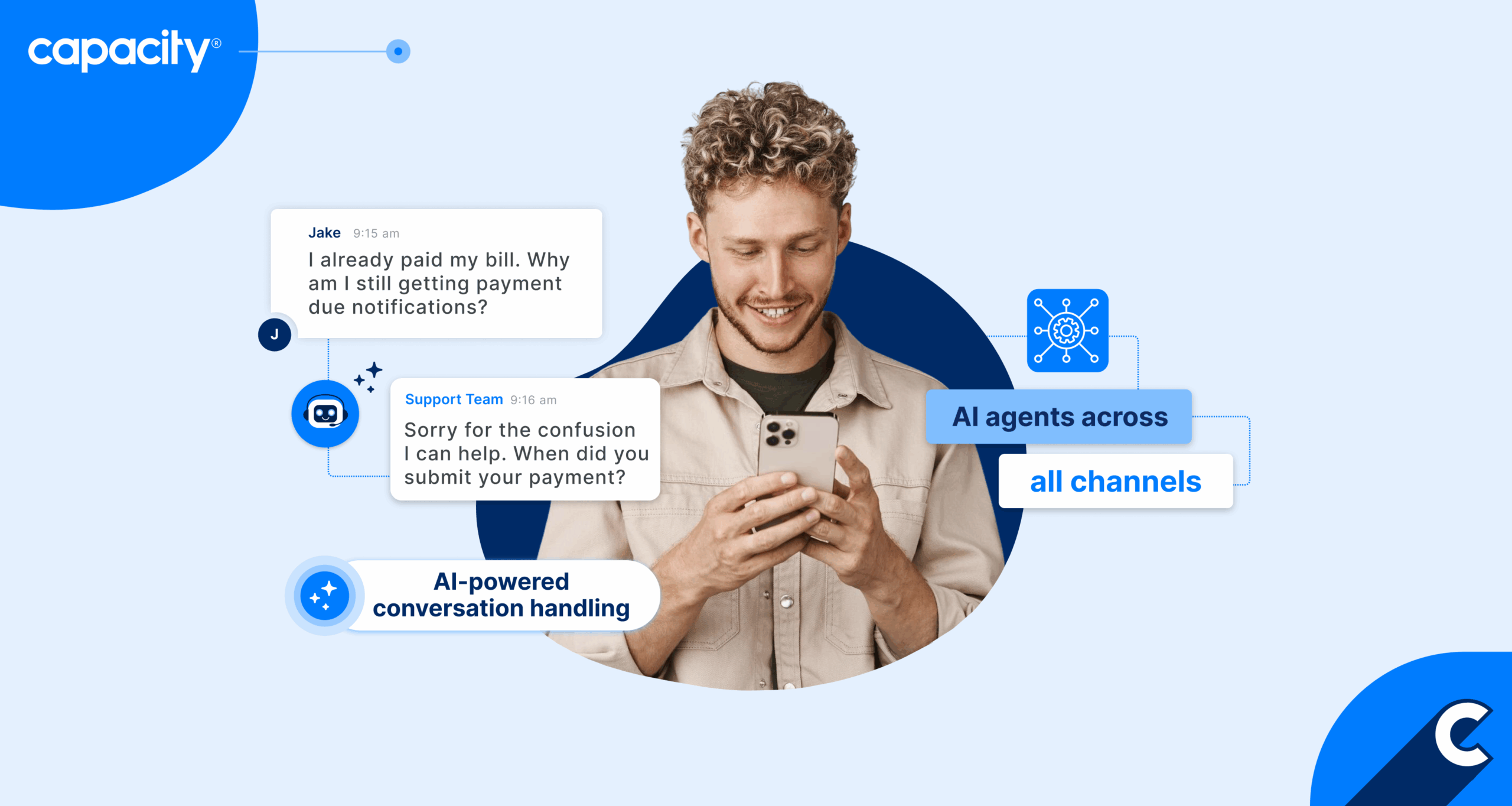
- AI-powered conversation handling: Both use artificial intelligence to understand and respond to customer queries in natural language, whether through text or voice.
- Omnichannel support: They can operate across multiple channels like web chat, email, SMS, and voice, so users get consistent support regardless of where they reach out.
- Automated response and deflection: Both platforms help automate responses to common questions and reduce the load on human and AI call center agents by deflecting repeat inquiries.
- Knowledge base integration: Each system ties into a centralized knowledge source, connecting documents, FAQs, help articles, and internal data, so the AI delivers accurate, consistent information.
- Agent assist and workflow support: Both provide tools that support human agents by suggesting responses, pulling up relevant information, or triggering workflow automation.
Sierra AI vs. Capacity key differences
At the core, Sierra AI and Capacity share a goal: helping companies automate their customer support to provide better and more timely service and cut costs.
However, when you look closer, each tool has unique features designed for different business needs. This is important because what works for one company might not work or be necessary for yours. Let’s take a look at where their unique advantages lie.
Sierra AI makes it easy to configure AI agents
Sierra AI’s main product is its conversational AI agents. The platform is built around the idea that you should be able to create and customize AI call center agents quickly by defining what they do, how they speak, and how they behave, without heavy engineering work. This opens the door to automation even for smaller businesses that might otherwise not have the resources to build their own AI agents.
How it works:
- You can spin up new Sierra AI agents for different functions like support, sales, billing, onboarding, etc., with minimal configuration overhead.
- The tooling is generally oriented toward non-technical admins. You have features like point-and-click behavior, easily set personality and tone, prebuilt templates, and less reliance on dev resources.
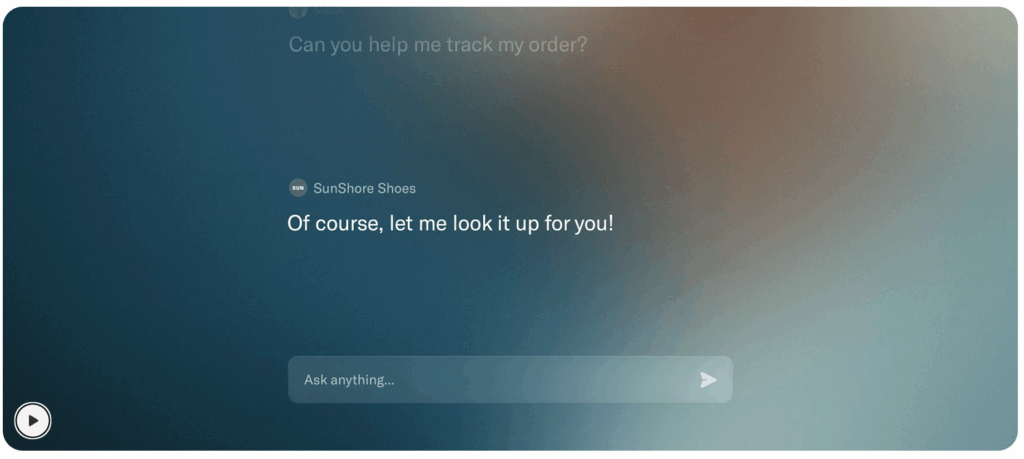
This way, you can prototype, experiment, test, and iterate on Sierra AI agents faster because the platform is designed for that workflow.
Capacity deploys AI agents across all channels
Capacity emphasizes broad channel coverage, meaning the same AI knowledge and workflows can appear everywhere customers interact, such as:
- Web chat
- SMS
- Voice
- Messaging platforms like Teams and Slack
It’s important because your support automation should stay consistent across touchpoints, not just in one channel. Data shows that 45% of companies notice better customer engagement, 35% retain more customers, and 35% improve customer loyalty using omnichannel engagement.
Capacity’s architecture prioritizes omnichannel delivery, where the AI backend supports many front-end channels at once. If your organization needs automation that works everywhere your users reach out, Capacity’s channel deployment is a strong option.
Sierra AI has intuitive tone adjustments
The platform gives you fine-grained control over how your Sierra AI agents sound. You can decide not just what they say, but how they say it, to combine the powers of agentic and generative AI.
This matters because modern contact centers and customer support agencies operate across different countries and regions.
Many people are still concerned about interacting with AI-powered customer support agents because they believe they all sound robotic. Sierra AI customer service features challenge that by allowing you to not only select from 34 (and more coming) languages, but also:
- Accents
- Tones
- Voice styles
- And more
You can dial the AI’s voice and tone to match your brand—for example, friendly, formal, casual, or expert—without deep technical tweaks. In most cases, you can do it, using simple sliders or presets that adjust sentiment, personality style, empathy levels, and phrasing norms.
Teams that care a lot about brand voice consistency will find Sierra’s tone controls useful and easy to manage.
Capacity connects all support activities in one platform
Capacity positions itself as a centralized support hub. It’s not only about AI responses but also about bringing all support functions together:
- Knowledge base management
- Ticketing or case workflows
- Automated routing
- Internal support and helpdesk
- Analytics and reporting
- AI response automation
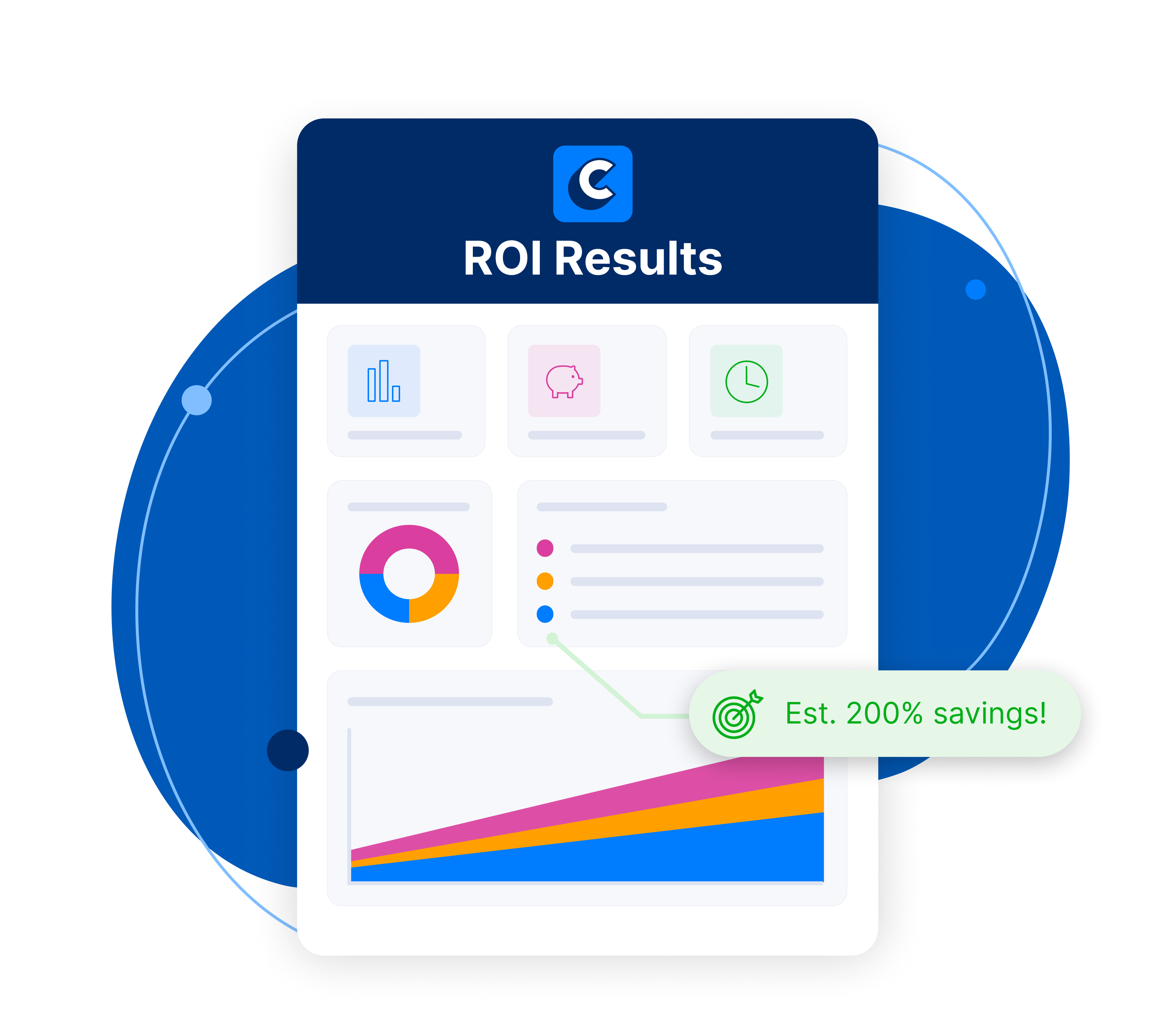
Capacity achieves all this by unifying your data across internal documentation, chats, slide decks, third-party integrations, and more. This connected and centralized data can be used as your “business brain” to power customer support and help your employees find information and take more ownership.
The best part is that Capacity replaces multiple disconnected AI tools with one platform that supports the entire customer journey. Fewer vendors mean lower costs and less confusion.
If you want a unified support workspace where collaboration, KBs, ticketing, and automation live together, Capacity leans into that.
Capacity offers a corporate knowledge search and a modern knowledge base
Capacity is also a great knowledge management system example. It includes a robust, centralized knowledge platform that connects your knowledge, data, and systems into one AI Knowledge Layer—powering your intelligent virtual agents, human agent assistance, auto-QA, and conversational intelligence across every channel.
How it works:
- Corporate knowledge search: This lets employees or AI agents instantly search across all company information—policies, product documents, procedures, internal guides, ticket histories, client files, etc. All you need to do is type a question or prompt, and the Answer Engine® provides a clear and concise answer without unnecessary documentation or sending you to the FAQ page.
- Modern knowledge base: Capacity includes tools to create, maintain, and organize content, using:
- Rich formatting and categorization
- Version control or review workflows
- Permissions and governance
- Analytics on what content is most useful or most accessed
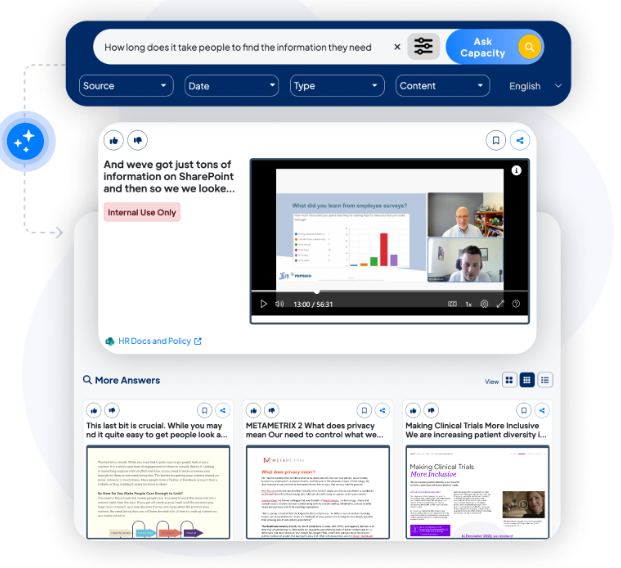
All support or internal agents pull answers from the same source of truth, reducing contradictory or outdated responses. You spend less time duplicating answers or hunting for buried information.
Capacity provides employee support
Capacity is also designed to help internal teams get answers and complete tasks quickly. It offers many AI agent assist tools like a search engine, unified knowledge base, real-time coaching, post-call summaries, and more.
How different teams can use Capacity:
- Customer support: Employees find information to assist customers in seconds, get real-time suggestions, and automate manual work such as summarizing interactions or transferring information to other platforms.
- IT support: Employees ask about password resets, VPN setup, software access, etc., and get automated help or guided steps.
- HR inquiries: Team members check policies about vacations, benefits, and onboarding procedures without submitting tickets or contacting their colleagues every time they have a question.
- Operations assistance: Internal staff find process docs, tools, forms, or step-by-step instructions.
- Finance or admin requests: Employees get answers about reimbursement policies, expense workflows, or tools without email back-and-forth.
This feature speeds up internal workflows, as staff don’t waste time asking around for answers and get what they need instantly.
The verdict: Sierra AI vs. Capacity: Which is right for you?
After reading the article, you’ve probably noticed that both of these AI customer service companies have great features and advantages. So let’s summarize which businesses can benefit from Sierra AI and which can benefit from Capacity.
Go with Sierra AI’s customer service solution
…if your goal is best-in-class conversational AI agents that are easy to configure and sound right for your brand.
Choose Sierra AI agents if your priority is:
- High-quality, natural conversational experiences
- Conversational agents that take action
- Rapid agent configuration with brand voice
Go with Capacity
…if you want a broader support platform that unifies customer support, internal help desks, workflows, and knowledge, and scales across channels.
Choose Capacity if your priority is:
- A unified support ecosystem
- Consistent omnichannel coverage
- Employee support and corporate knowledge search
- Structured knowledge management
- AI-powered customer experience automation
The most important choice is your team and customers
We hope this guide on Sierra AI and Capacity gave you a better idea of which platform is best for your unique business needs and customers.
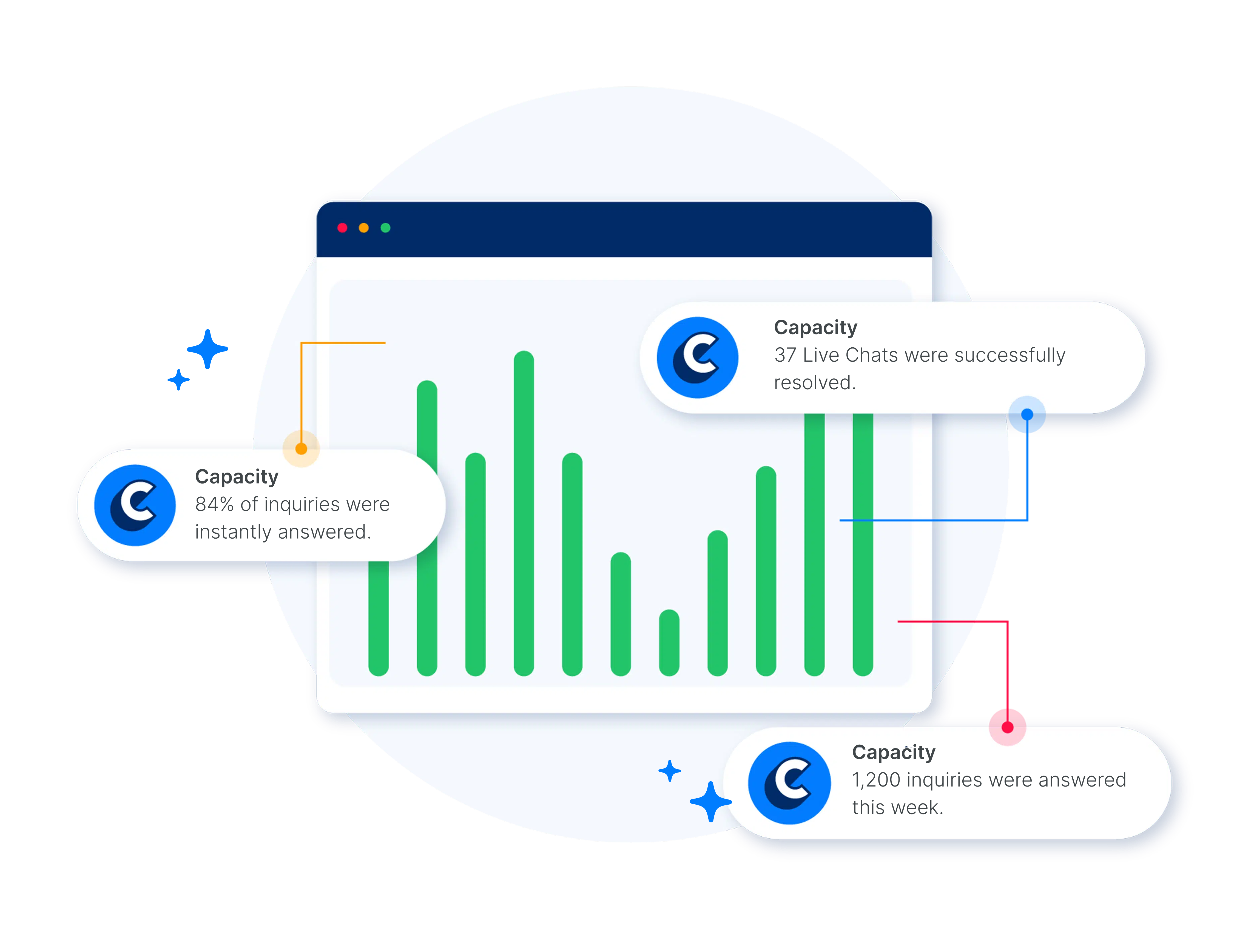
However, if integrated knowledge, automated repetitive interactions, empowered agents, and full visibility into the customer journey are your priority, Capacity has exactly the right solution for you.
Book a demo today to scale efficiently, reduce costs, and deliver exceptional service across every channel.
Capacity Can Do?
FAQs
The main difference is focus. Sierra AI emphasizes highly configurable, human-like conversational agents with strong control over tone and behavior. Capacity focuses on being a unified support platform, combining AI automation with omnichannel deployment, employee support, and a modern knowledge base.
Capacity is generally the better choice for employee support. It’s designed to handle internal use cases like IT help desks, HR questions, operations support, and corporate knowledge search. Sierra AI is more oriented toward external, customer-facing conversations.
Yes, both platforms support omnichannel experiences, including chat and voice. However, Capacity places stronger emphasis on deploying AI consistently across all support channels from a single platform, while Sierra AI prioritizes the quality and configurability of the conversational experience.
Sierra AI is typically easier to configure when it comes to AI agent behavior and tone. Its tooling is designed to let non-technical teams quickly adjust how agents speak, respond, and act. Capacity offers powerful configuration as well, but within a broader support-platform context that includes workflows and knowledge management.
Sierra AI is a conversational AI platform designed to help companies build and deploy intelligent, customer-facing AI agents. These agents can handle natural, multi-turn conversations, adjust tone and personality to match a brand, and take actions such as updating records or triggering workflows in connected systems. Sierra AI is especially focused on delivering high-quality, human-like interactions that go beyond simple FAQ responses.