


 Customer Support
 HR & Ops
 IT Support
 Sales & Marketing
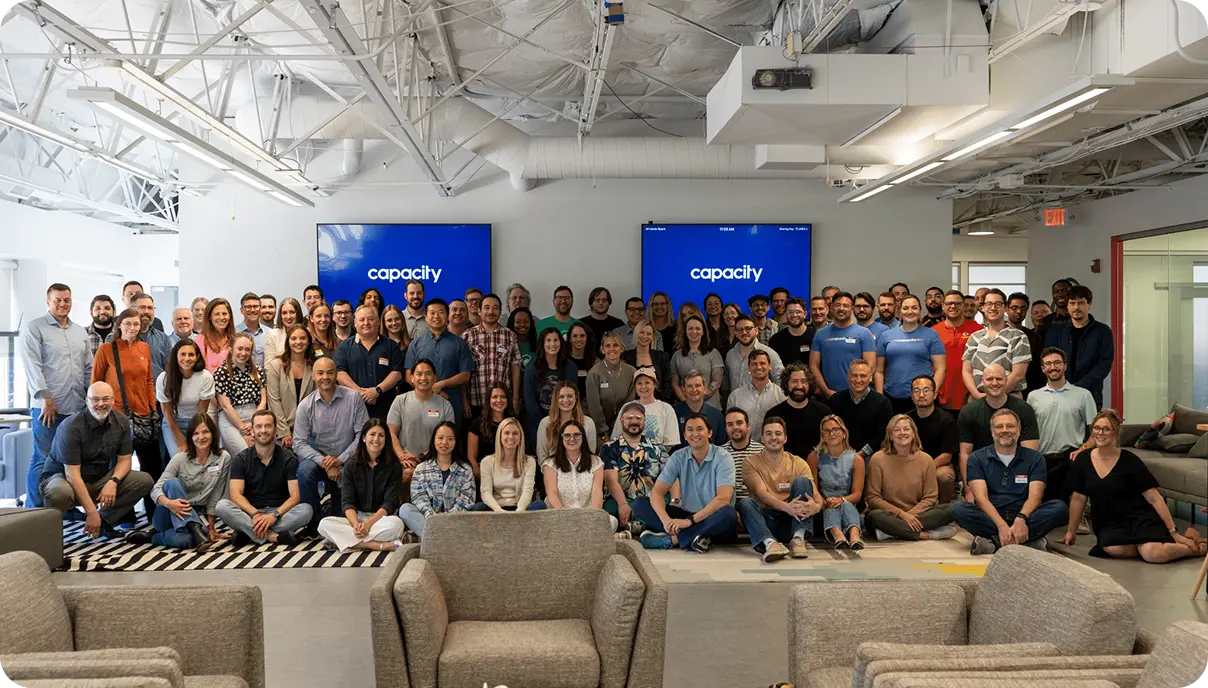
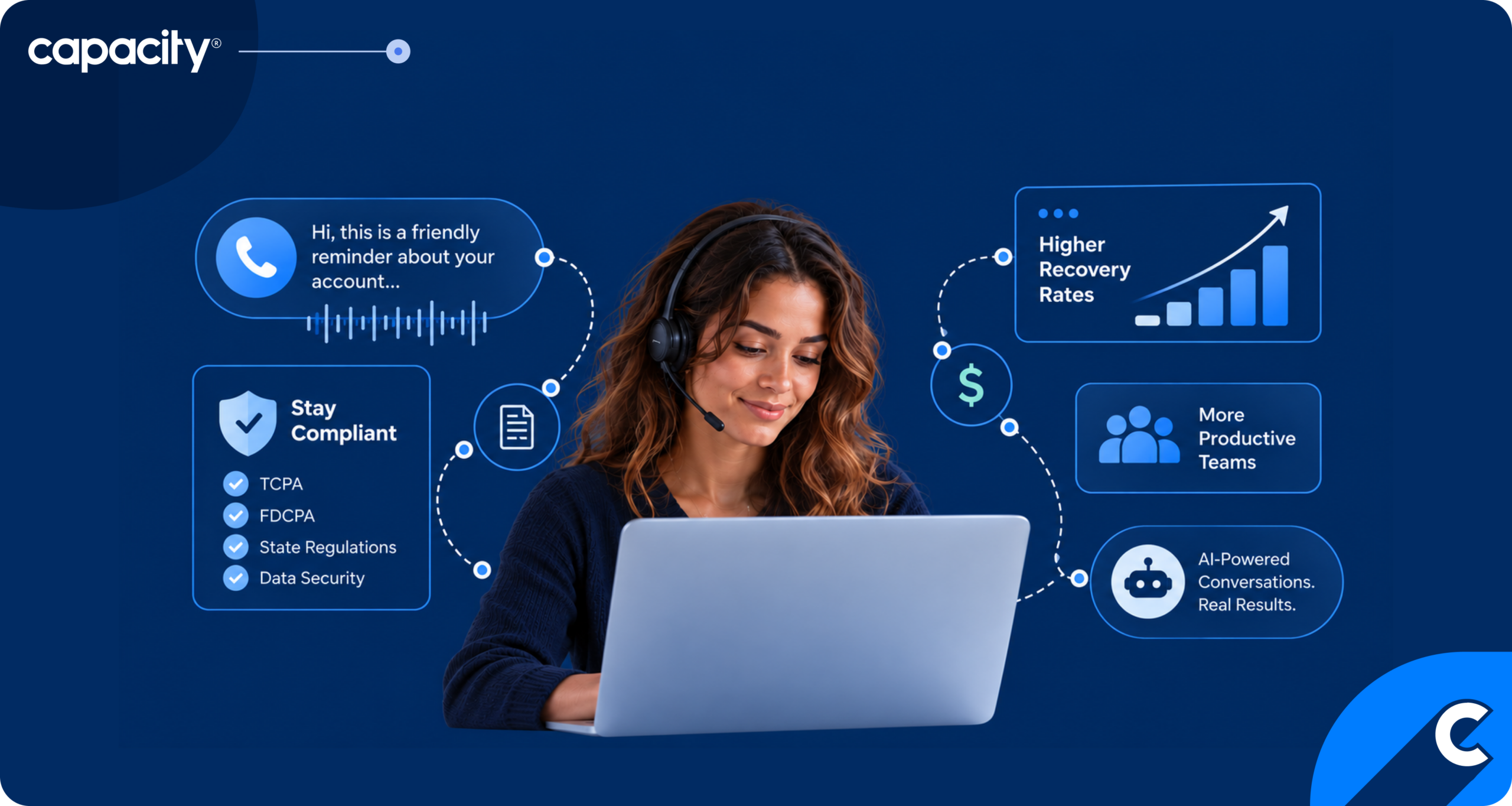
- AI platforms for outbound collections are software tools that use conversational AI across voice, outbound SMS campaigns, and email to proactively contact customers about overdue payments, negotiate payment plans, and log outcomes.
- Contact centers adopt AI platforms for outbound collections to cut compliance risk, lower cost per contact, and improve recovery rates through better timing and account prioritization.
- ROI is typically measured with recovery rate, cost per recovered dollar, right-party contact rate, and compliance incident rate.
AI platforms for outbound collections are a convenient and cost-effective way to remind your customers about upcoming appointments, recover debt, follow up on sales deals, and increase your revenue.
In short, outbound collections automation allows you to reach more people in less time with less investment, while personalizing service for each customer and reaching out at the right time to comply with regulations.
In this article, we explain how AI-powered outbound campaigns and collections work, why they’re much better for the job than manual methods, what these outbound collection platforms do, and what you should be aware of before signing a contract with one.
What is an AI platform for outbound collections?
An AI platform for outbound collections is software that proactively reaches out to customers about debts, overdue payments, or accounts needing resolution. This contact center technology can autonomously handle reminders, negotiations, and payment collection at scale across voice campaigns, text, and email. For example, AI voice agents for collections can call customers at the right time and resolve issues using conversational AI that detects the recipient’s intent and tone and adjusts its responses accordingly.
AI outbound collection is more advanced than predictive dialers that were very popular just a few years ago. While predictive dialers increase the volume of outbound calls a human agent can handle, they don’t understand or generate speech. An AI collections platform, by contrast, can have a proper conversation, verifying identity, explaining a balance, negotiating a payment plan, and logging the outcome just like your human agents would.
AI platforms for outbound collections are also different from basic chatbots. Standard chatbots sit on a website or app waiting for a customer to initiate contact. An outbound collections AI initiates contact itself, across channels, on a schedule tied to due dates or delinquency stages. For example, AI SMS for payment recovery can send tailored texts to prevent late payments.
Why are contact centers replacing manual collections with AI?
Contact centers are replacing manual collections with AI because they can’t risk violating regulations, spending millions on operational costs, or manually finding the best times to contact each customer.
Because of that, the industry is booming. The global outbound call center market is expected to grow from $14.8 billion in 2025 to $32.6 billion by 2034 (Dataintelo, 2026). So you have to find ways to match this speed without losing quality. And outbound AI calling for collections can help you achieve that — here’s how.
Outreach timing
Timing is one of the biggest levers in recovery, and the data is stark. The longer a company waits to remind customers about their debt, the higher the chances the payment will be late.
Due to poor timing and late debt repayments, companies are losing money. According to the SAP Taulia Supplier Survey from 2025/26, 55% of suppliers worldwide are dealing with late payments, and the number seems to be going up from previous years. The EU Payment Observatory Annual Report from 2025 found that small businesses in the EU could unlock €100bn every year if late payments were paid on time.
If you have just a few customers with late payments, that’s fine, but most businesses deal with hundreds and sometimes thousands of overdue payments. When that’s the case, human teams can’t reliably hit that early window across an entire portfolio. AI-augmented outreach can apply that same “call early, call the right accounts first” logic, at whatever volume the portfolio requires, without the coverage gaps that come from finite agent hours.
Compliance exposure
Compliance is one of the highest hidden costs in collections. TCPA damages multiply per call or message. Unlike the FDCPA’s $1,000-per-lawsuit cap, a single misconfigured autodialer campaign can generate thousands of violations within days. In dollar terms, courts generally treat each call or text as a separate violation, so a single campaign of 10,000 non-consensual calls can create statutory exposure of $5–15 million before any actual harm is even considered.
Individual violations aren’t cheap either: TCPA statutory damages run $500 per illegal call or text, rising to as much as $1,500 per violation for willful conduct.
Manual processes make this worse because compliance rules, like call windows, the 7-in-7 contact cap, required disclosures, and opt-outs by channel, are harder to track manually. AI platforms build those constraints directly into the outreach logic. An account can’t be contacted an eighth time in a week or dialed outside permitted hours, because the system enforces it.
Cost and coverage
Live agents are bound by shifts, time zones, and hiring cycles. An AI platform can run outreach across voice, SMS campaigns, and email continuously, scaling up during peak periods and scaling back down during quiet ones without the lag time of hiring or training new staff.
We found that the average cost per live agent interaction can run anywhere between $7 and $13.50, while automation can lower this to between $0.50 and $2.00 per interaction.
That means broader account coverage at a lower marginal cost per contact, since the platform isn’t paying per-hour labor to place routine reminder calls or send payment-plan texts.
What does an AI collections platform do?
AI collection platforms do much more than just send a reminder about an upcoming appointment (although they also do that). Account prioritization, finding the best time for contact, identity verification, personalization, and other features are among the leading reasons why AI contact centers choose to automate their outbound collections.
1. Account prioritization
Outbound collections automation platforms use predictive scoring models to rank accounts by likelihood to convert, weighing factors like debt age, payment history, and past channel responsiveness, so outreach effort goes to the accounts most likely to pay first.
2. Outreach initiation
The AI agent contacts the debtor through their preferred channel at the time most likely to result in a connection, based on prior response patterns. Say it shows that a customer never picks up after 1 PM. The AI-powered platform would use this information to adjust its outreach and automate customer service.
3. Identity verification
Before disclosing any account details, the AI agent confirms it has reached the right party, protecting against third-party disclosure violations. In practice, AI confirms a name, date of birth, or account number before continuing. If the caller can’t verify, the AI ends the call or hands it off to a human.
4. Required disclosures
The AI voice or text agent delivers the correct debt validation notice and any state- or regulation-specific language required for that account and jurisdiction, applied consistently every time.
5. Negotiation
The AI presents available payment options, walks the debtor through selecting one, and confirms the terms back to them before finalizing.
6. Plan documentation
Once an arrangement is confirmed, it’s logged directly into the CRM with a full audit trail, including timestamps, disclosures given, and the exact terms agreed to.
7. Follow-up
The platform sends automated reminders ahead of upcoming billing and payments and, if a payment fails, the AI handles that conversation too, discussing what happened and getting the plan back on track.
What compliance requirements apply to AI-powered collections outreach?
While automated collections outreach makes compliance at scale easier, as you don’t need to manually make sure you contact the right people at the right time, it has limitations and regulations to adhere to. In 2024, the SEC ordered businesses to pay a record $8.2 billion in total financial penalties, including $2.1 billion specifically in civil fines. This makes compliance a critical part of AI collections. Let’s go over the main requirements for AI outreach.
TCPA
The Telephone Consumer Protection Act (TCPA) treats AI-generated voice as an “artificial or prerecorded voice,” following the FCC’s February 2024 ruling. This means that any AI voice call is subject to TCPA consent rules. For debt collection specifically, the required standard is prior express consent, which can be given orally, for example, when a consumer provides their phone number as part of the original transaction.
Prior express written consent applies to marketing and telemarketing calls, not routine collections outreach. AI platforms for debt collection in contact centers still need to capture and timestamp consent records, since number reassignment can invalidate previous consent.
Regulation F
The Fair Debt Collection Practices Act, or simply Regulation F, bans abusive, unfair, or deceptive debt collection practices. One of the main requirements is to cap phone contact attempts at 7 per week per debt. The tricky part is that it’s tracked at the consumer level, not per account, meaning your system needs consumer-level frequency tracking, since account-level tracking creates a systemic infrastructure gap.
FDCPA
The FDCPA requires a debt validation notice that tells the consumer they can dispute the debt, request proof of it, or demand the collector stop contacting them, regardless of whether the debt is actually valid. Getting this disclosure right matters because statutory damages of up to $1,000 per lawsuit are available even without any provable financial harm.
State-level rules
States add additional restrictions on top of federal law, like specific calling-hour windows, for example, collectors generally can’t call before 8 a.m. or after 9 p.m. in the consumer’s local time, their own consent standards, and required disclosures that can go beyond the FDCPA.
Some states also close federal gaps entirely. Florida’s FCCPA, for instance, covers original creditors collecting their own debts, which the FDCPA doesn’t touch. With the CFPB scaling back federal enforcement activity through 2026, state attorneys general and legislators have picked up more of the oversight burden, making state-specific compliance more important.
How does AI outbound collections compare to a predictive dialer?
The main difference between AI platforms for outbound collections and predictive dialers is that predictive dialers solve a narrower problem: keeping human agents busy by dialing many numbers at once and filtering out voicemails, busy signals, and disconnected lines.
AI outbound platforms focus on conversation quality. They maximize the likelihood that each attempt reaches the right person, at the right time, through the right channel. Plus, they then carry the entire conversation, from identity verification through to a confirmed payment plan, without requiring a live agent at all.
To get a better idea, here’s how the two compare side-by-side.
| Comparison | Predictive Dialer | AI Collections Platform |
|---|---|---|
| Conversational capability | None | Full natural-language conversation; handles objections, adapts live |
| Compliance automation | Limited to dialing rules; caps/disclosures depend on agent adherence | Frequency caps, consent checks, disclosures enforced in the call flow |
| Right-party contact performance | Optimizes agent utilization | 2–4x more right-party contacts per attempt via per-account timing |
| Negotiation & confirmation | None | Presents payment options, captures selection, confirms terms |
| CRM integration depth | Pulls contact lists; outcomes logged manually or via disposition codes | Two-way sync — pulls context, writes back full plan details |
| Cost model | Per-agent seats and call volume; scales with headcount | Usage or accounts handled; scales with contact volume, not staffing |
What should you look for when evaluating AI collections platforms?
When evaluating AI collections platforms, there are a few main features you should pay attention to, including channel coverage, integrations, deterministic logic, and other details that determine whether a platform truly covers what you need. Let’s take a look.
- Channel coverage: Covering as many channels as possible while staying on brand and consistent is necessary to build an omnichannel call center. The platform should run outreach across voice, SMS, email, and even WhatsApp marketing campaigns since consumers respond differently depending on preference, and each channel plays a distinct role.
- Compliance infrastructure: Frequency caps, calling-hour windows, consent tracking, and required disclosures need to be built into the platform’s execution logic. Given that TCPA and FDCPA violations can carry statutory damages per call or per lawsuit, this is the single highest-stakes item on the list.
- Deterministic offer logic: The rules governing what payment plans, settlement percentages, or terms the AI can offer should be explicit and auditable, not left to the model’s judgment in the moment. This matters both for consistency and for defensibility if an offer is ever challenged.
- RPC performance: Right-party contact rate is the metric that most directly predicts recovery, so ask for real data on how the platform’s timing and channel-selection logic performs against a static schedule.
- Integration depth: The platform needs a two-way connection to your CRM or core servicing system. This allows AI to pull account context to personalize outreach and write back outcomes, payment plans, and disposition codes automatically. A one-way integration that only exports contact lists leaves you back to manual logging for everything that matters.
- AI-to-human escalation and handoffs: Not every conversation should end with the AI. Disputes, hardship claims, or complex negotiations may need a live agent. Evaluate how cleanly the platform detects when a handoff is needed and how much context transfers with the escalation, since a clumsy handoff forces the consumer to repeat themselves.
- Audit trail: Every contact attempt, disclosure given, and agreed-upon term should be logged with timestamps in a way that can be pulled up on demand. This is what turns compliance from a policy claim into something you can actually prove if a regulator or plaintiff’s attorney asks.
How do you measure ROI on an AI outbound collections platform?
The clearest way to measure outbound AI agent ROI is to compare a small set of metrics before and after deployment, using the same portfolio segment so the comparison isn’t skewed by seasonal or economic shifts in delinquency. Recovery rate and cost per recovered dollar tell you whether the platform is moving more money at a lower marginal cost, while right-party contact rate isolates whether the lift is coming from better targeting and timing.
You should also don’t measure ROI on recovery alone. A platform that recovers slightly more but generates a spike in compliance incidents, or that gets people to agree to plans they don’t keep, has just moved the cost somewhere less visible. Arrangement compliance rate and compliance incident rate together act as a check on whether the recovery gains are durable and low-risk, or borrowed against future litigation exposure and re-defaults. Let’s go over the main metrics to measure and see the impact of AI outbound collections.
| Metric | What it tells you |
|---|---|
| Recovery rate improvement vs. baseline | Whether the platform is collecting more from the same portfolio than the prior process |
| Cost per recovered dollar | Whether gains in recovery are coming at a lower or higher operating cost per dollar |
| Right-party contact rate | Whether outreach is reaching the correct person, the leading driver of recovery outcomes |
| Arrangement compliance rate | Whether debtors are keeping the payment plans they agree to |
| Compliance incident rate | Whether gains are sustainable, or coming at the cost of increased legal and regulatory exposure |
AI outbound collections for your growth and peace of mind
Reminding customers about late payments, upcoming appointments, and upsells keeps you paid on time and your customers well taken care of. But as your business grows, so does the complexity of outbound collections.
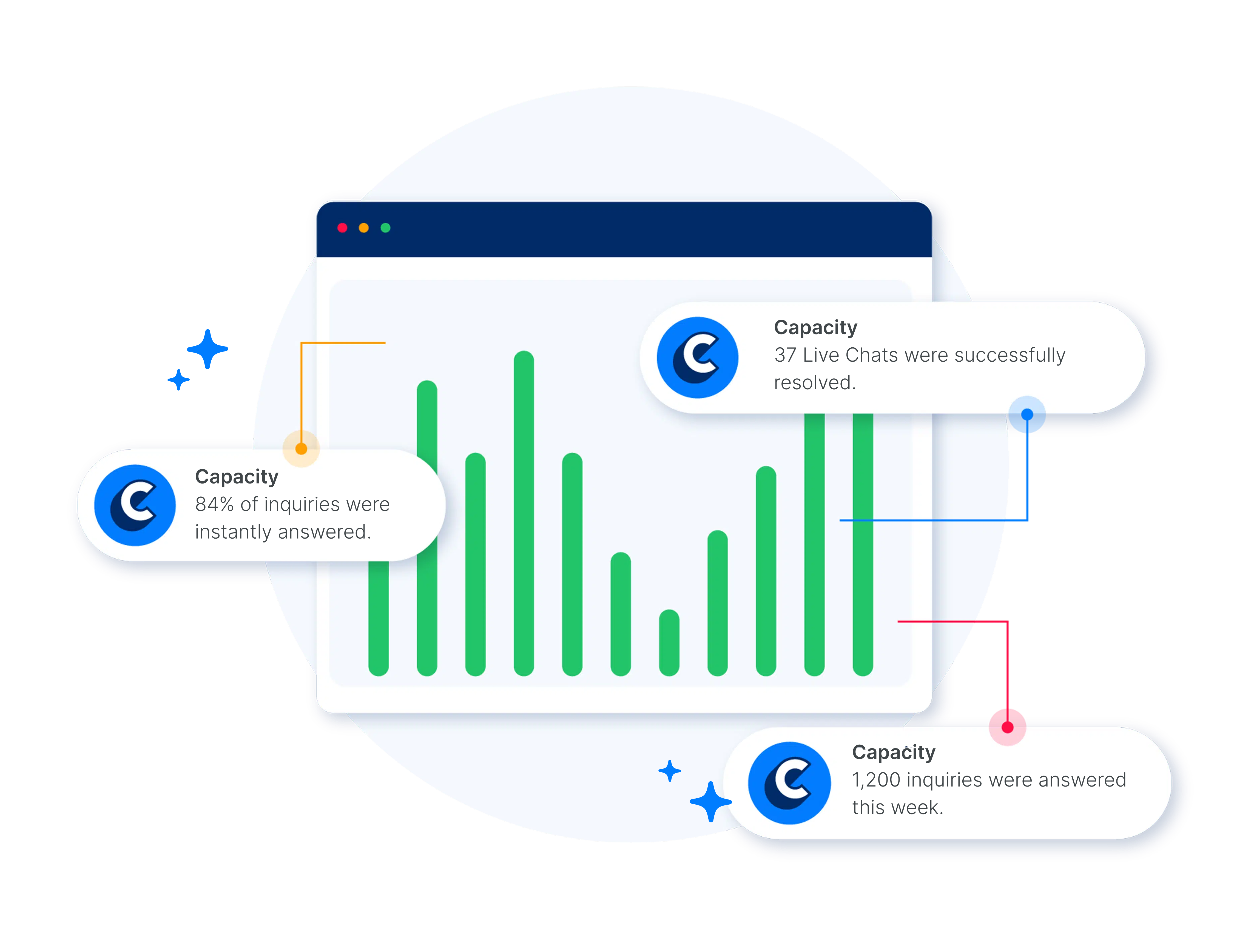
That’s where automation comes in. Still, when you’re dealing with something this sensitive, you need a partner you can trust to get it right. Capacity, a CX automation platform, helps you achieve that. Its AI outbound collections run the whole process themselves: they have compliance built in, they reach out to customers, can verify them, and engage in conversation to make the process personalized and positive.
With the same solution, one of our clients, Brightree, a healthcare technology solution provider, collected $4.7M in late-stage debt and $6.5M from agent transfers after implementing Capacity.
with Capacity AI Agents.
FAQs
Debt collection AI software improves outbound debt collection by timing outreach to when accounts are most likely to convert, prioritizing accounts by predictive scoring, and scaling across channels 24/7 without adding headcount, while building compliance rules directly into execution instead of relying on agent adherence.
A predictive dialer just dials numbers and routes live answers to an agent, while an AI voice agent can carry the conversation, verify identity, negotiate, confirm a plan, and enforce compliance rules in the call flow itself.
To measure ROI, track recovery rate improvement vs. baseline, cost per recovered dollar, right-party contact rate, arrangement compliance rate, and compliance incident rate together.
When evaluating AI collections platforms, look for multi-channel coverage, compliance infrastructure enforced at the platform level, deterministic and auditable offer logic, measurable RPC performance, deep two-way CRM integration, clean AI-to-human escalation, and a full audit trail.